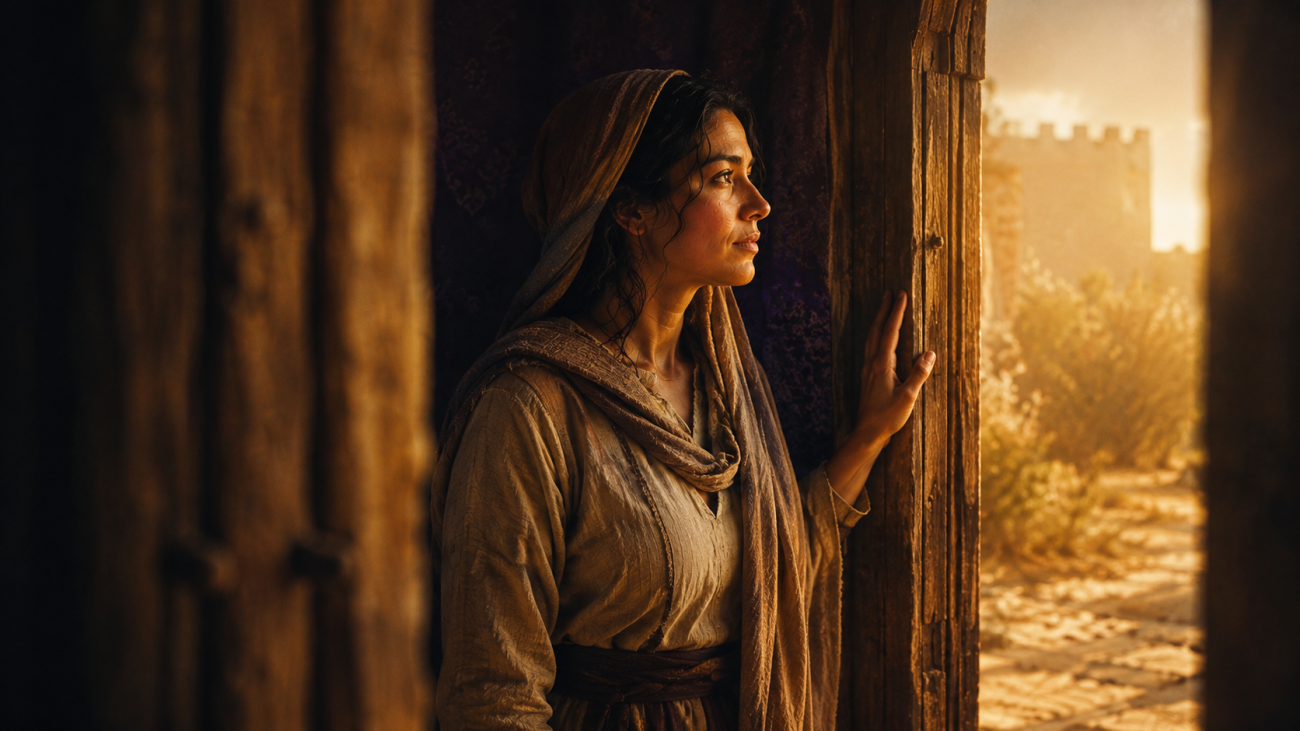
There is a version of this you do not say out loud very often.
The version where you genuinely believe in marriage, believe in its goodness, believe God designed it, believe it is a gift and a calling for most people, and also, quietly, in a part of your inner world that does not get much airtime, have started to believe that it is probably not for you specifically.
Not dramatically. Not with bitterness, or at least not primarily. More like a gentle, private accommodation. A quiet filing of the hope into a more theoretical category. You still mention it in prayer sometimes. But the way you mention it has changed. It has become more careful. More guarded. More past the point of the urgent, present-tense asking that you did when the hope was fresh.
You have been to the weddings. You have been the bridesmaid. You have smiled at the engagement announcements and meant the congratulations and driven home in a particular kind of quiet that you do not describe to most people.
You have had the seasons of believing powerfully. The prayer warriors who spoke over you. The scriptures that seemed directly addressed to your situation. The conference moments when something rose in you that felt unmistakably like faith for this specific thing.
And then nothing happened. Or nothing continued to happen. And over time, without a single dramatic moment of giving up, without deciding to stop believing, the governing conviction of your inner world quietly shifted.
From “God will provide a spouse” to “God provides for most people” to “God has a plan for my life that may or may not include this” to something that functions, in practice, like: this is probably just not for me.
This post is for that shift. Not to tell you to believe harder. To tell you precisely what happened, why it happened, and what actually changes it.
The Hope That Became a Theory
There is a distinction that matters enormously in this conversation, and most teaching about singleness and waiting never names it clearly:
There is a difference between believing in marriage as a theological proposition and holding a present-tense, governing, Layer Three conviction that God intends it for you specifically.
Most believers in a prolonged marriage waiting season still hold the first. They believe in marriage. They believe God is good and provides good gifts. They believe the scriptures about companionship and covenant and the goodness of partnership.
What has eroded, quietly, predictably, without any single identifiable moment of collapse, is the second. The specific, personal, present-tense conviction that this promise is actively in play for them. That God intends it for them and is working toward it in ways the silence does not currently confirm.
―― “The hope has become a theory. It lives in the mind as a theological position. But it no longer governs the inner world as a present-tense conviction about their specific situation.” ――
This is not faithlessness. This is not bitterness. This is not the result of insufficient spiritual discipline. This is what happens at Layer Three, the deep, governing, Proverbs 23:7 level of the inner world, when the gap between the hope and its fulfillment stretches long enough on borrowed supply.
The borrowed supply ran out. The Sunday morning believing was sustained by the collective faith of the room. The conference hope was borrowed from the speaker’s certainty. The prayer warrior’s word was genuine and well-intentioned, but it was their firsthand word, not yours. And secondhand faith, however real, however valued, has a ceiling. And the ceiling is lower in prolonged waiting seasons than in easy ones.
What has formed in the silence is the marriage equivalent of the Genesis 16 mentality. Not “The LORD has prevented me from bearing children.” But its equivalent in the language of this particular waiting:
“This is probably just not for me.”
How the Genesis 16 Mentality Forms in the Marriage Waiting Season
The formation arc is identical to every other prolonged waiting season. It does not announce itself. It does not happen in a single moment. It moves through stages that feel, at each transition, like wisdom rather than erosion.
Stage One The expectation season.
The hope is fresh and present-tense. You pray specifically, confidently, with the kind of faith that does not yet know what prolonged silence feels like. You believe God will provide. You are looking for it. You hold the hope actively at Layer Three as a governing, daily-orienting conviction about your near future.
Stage Two The confusion season.
Time has passed and nothing has moved in the direction the hope was pointing. A question enters the inner world that was not there before: why hasn’t this happened? You are still believing, but the belief now requires effort. Layer Two has started running questions that Layer One’s declarations are struggling to keep pace with.
Stage Three The explanation season.
The mind begins constructing reasons for the silence. Maybe God is working on me first. Maybe there is preparation that needs to happen. Maybe the person is not ready yet. Maybe I am not ready yet. These explanations are not unreasonable, they are genuine attempts to make peace with a silence that has no other offered explanation. But they are also the beginning of Layer Three accommodation.
Stage Four The accommodation season.
The hope is no longer a present-tense, governing conviction. It has been filed under “something God may have for me eventually” or “a desire I hold loosely” or “something I trust God with.” These phrases are not wrong in themselves. But the shift from the active, expectant, Layer Three believing of stage one to the theoretical, loosely-held hoping of stage four is significant. And it is this stage four position that most believers in a prolonged marriage waiting season are actually living from, while performing the stage one vocabulary on Sundays.
Stage four is not the end. It is not a permanent condition. It is not evidence of spiritual failure or insufficient faith. It is the predictable, natural, honest outcome of a Layer Three conviction that has been sustained too long on secondhand supply without the firsthand encounter that refreshes it at depth.
The treatment is not returning to stage one declarations. It is not performing the certainty that stage four no longer holds. It is the encounter that reaches Layer Three and replaces the accommodation with a governing conviction that holds because it was personally received rather than borrowed.
What Ruth’s Story Teaches the Marriage Waiting Season
Of all the biblical stories that speak to the marriage waiting season, Ruth’s maps most precisely onto the experience of the believer in prolonged singleness, because it involves the most ordinary, least dramatic, most faithfully-maintained posture of any waiting season character in Scripture.
Ruth’s situation at the beginning of her story is not just singleness. It is singleness compounded by widowhood, by the loss of the life she had built, by relocation to a country where she was a foreigner, and by a level of material poverty that required her to glean in fields behind the harvesters for survival. The external evidence of her situation pointed consistently away from any future that included the kind of partnership and security she had lost.
And yet the text records no moment of dramatic declaration on Ruth’s part. No confession of faith for a husband. No prayer gathering. No moment where she performed impressive spiritual certainty about a future that her circumstances gave her no reason to expect.
What the text records is faithfulness and proximity. She stayed near Naomi. She stayed near the work available to her. She stayed in the field that provided for her and Naomi’s survival. She was present, near, faithfully occupying the ordinary space in front of her, and that faithfulness and proximity put her in the field of Boaz on the exact morning that changed everything.
―― “Ruth did not manufacture the encounter with Boaz. She simply stayed near enough to the ordinary work of her life that when the encounter arrived, she was in the field.” ――
This is the tent door posture applied to the marriage waiting season. Not performing certainty about a future the circumstances do not confirm. Not declaring a husband into existence. Simply staying near — near to God, near to the ordinary faithful work of life, present and available in the ordinary places where encounters arrive.
Ruth’s encounter with Boaz was not dramatic. He noticed her. He asked about her. He extended grace and provision. And from that ordinary morning in an ordinary field, the entire trajectory of her story, and the genealogy of David and ultimately of Christ — turned.
The field mattered. Not because Ruth performed anything impressive in it. Because she was in it. Present. Near. Available to be noticed by the one whose noticing would change everything.
The Specific Damage the Waiting Season Does to Marriage Faith

The marriage waiting season has a particular quality of pain that other waiting seasons do not always share, and it is worth naming precisely because the damage it does to the governing conviction at Layer Three is specific rather than general.
The Comparison Wound
Every wedding invitation, every engagement announcement, every pregnancy announcement that follows a wedding, each one is experienced not only as joy for the other person but as a quiet, involuntary measurement. A data point in the ongoing inner calculation of whether this is moving for you or not. Over time, the accumulation of those data points, even when each one is genuinely celebrated, builds a Layer Three case against the personal promise. The evidence is not absolute. But it is consistent. And Layer Three responds to consistent evidence.
The Performance Wound
The Christian single in a prolonged waiting season is often surrounded by well-meaning community that offers a particular kind of comfort: be content. Be whole in God. Do not make this an idol. Trust His timing. All of these things are true. And all of them, when offered repeatedly in the context of a specific unmet longing, function to suppress the honest inner expression of that longing rather than bringing it to God. The result is a person who has learned to perform contentment and wholeness at Layer One while the actual governing conviction at Layer Three runs something quite different.
The Age Wound
Unlike most waiting seasons, the marriage waiting season carries a biological and social clock that adds a dimension of urgency the waiting can ill afford. Every year that passes is not only another year of silence, it is, in the mind’s calculation, another year of narrowing possibility. This produces a particular kind of Layer Three pressure: the accumulating evidence is not just about the absence of the promise but about the closing of the window in which the promise could realistically arrive. And Layer Three responds to that pressure by accommodating earlier and more completely than it might in a different kind of waiting season.
These three wounds compound the standard Layer Three erosion that all prolonged waiting seasons produce. They make the marriage waiting season one of the most complex and most underserved in the Christian content space. And they make the encounter that reaches Layer Three more urgently needed here than in almost any other context.
What Actually Reaches the Deep Place in the Marriage Waiting Season
The same mechanism that changes the governing conviction in any other waiting season changes it here. The encounter, the direct, personal, firsthand word from God that addresses the specific situation rather than speaking in general terms about His goodness, is what reaches Layer Three and replaces the stage four accommodation with a present-tense, governing conviction.
But in the marriage waiting season, the encounter has a specific quality that is worth naming. Because the comparison wound, the performance wound, and the age wound have combined to produce a Layer Three that is more defended against hope than in most other waiting seasons. The person has learned, over years of genuinely trying to believe, that allowing themselves to hope at depth is costly when the hope is not confirmed.
The encounter that reaches a defended Layer Three is not the generic encouragement that God is good and His timing is perfect. It is the word that is so specific, so addressed to this person’s actual situation, the actual shape of their longing, the actual length of their waiting, that the specificity itself bypasses the defense.
Sarah’s encounter at the tent door worked not because it said “God is faithful” in general terms. It worked because it named her, named her situation, named her timeline. The specificity was the evidence that the word was not borrowed, not generic, not someone else’s encouragement extended in her direction. It was addressed to her. And at that level of address, the Layer Three defense could not hold.
This is what the tent door posture is for in the marriage waiting season. Not to manufacture certainty. Not to perform hope that stage four no longer holds. To position the self, honestly, consistently, without pretense, near enough to the presence of God that a word of that specificity can arrive and land at the depth it was designed to reach.
The marriage waiting season does not need more declarations about a spouse.
It needs the encounter that addresses the person waiting, by name, in their specific situation, with the specificity that only a firsthand word carries.
The Tent Door Posture for the Marriage Waiting Season

Proximity — staying near God in your actual condition
Not in the condition you believe you should be in before God will take the request seriously. Not in the condition of stage-one certainty that stage four no longer holds. In your actual current condition, the stage four accommodation, the defended hope, the honest exhaustion of a person who has been carrying this for longer than they planned.
Ruth did not wait until her circumstances looked more promising before she went to the field. She went in poverty, in widowhood, in the position of a foreigner gleaning behind harvesters. Her actual condition did not disqualify her from the field. And your actual condition does not disqualify you from the tent door.
Honesty — naming the stage four conclusion without shame
The performance wound has taught most believers in this season to manage the honest inner world into a more theologically appropriate presentation before bringing it to God. The tent door posture inverts that. It brings the honest inner world, the stage four accommodation, the private “probably not for me,” the guarded hope, the comparison wound, directly into God’s presence without editing.
Hannah brought her grief to the temple in its raw, unmanaged form. She wept so honestly that Eli mistook her prayer for drunkenness. The encounter that followed did not arrive despite that honesty. It arrived through it. Your unmanaged, unedited, honestly-stated inner world is not a barrier to encounter. It is the condition in which encounter most often comes.
Stillness — creating space for the specific word to arrive
The noise of the marriage waiting season is relentless: social media engagements, wedding seasons, well-meaning community advice, the internal noise of comparison and calculation. The specific, personal word that reaches Layer Three does not compete with that noise. It arrives in the stillness that follows it.
Creating deliberate spaces of stillness, not performing quiet, but actually being quiet, actually removing the noise for long enough that a word of specific address can land, is the most active thing a person in the marriage waiting season can do. Not because it guarantees the encounter on a schedule. Because it creates the condition in which the encounter can be heard when it comes.
Receiving — letting the word land without immediately explaining it away
The defended Layer Three of the marriage waiting season has developed a reflex: when something that feels like hope arrives, immediately find the reason it does not mean what it seems to mean. The testimony that moved you in church on Sunday is explained away by Monday morning. The scripture that seemed addressed to you is reframed as a general promise that applies to everyone. The sense in prayer that something specific was being said is explained as wishful thinking.
The posture of receiving simply chooses, in the moment when something arrives with the quality of personal address, not to immediately reach for the explanation. To let it land. To write it down. To hold it long enough to find out whether it holds under the weight of the ordinary week.
Frequently Asked Questions
Is it wrong to deeply want to be married as a Christian?
No. The longing for partnership, companionship, and covenant love is not a spiritual deficiency or an idol to be managed. It is the natural expression of a design that Scripture explicitly affirms: it is not good for man to be alone. Genesis 2:18 does not describe the desire for partnership as excessive or spiritually problematic. It describes it as the observation of the Creator Himself. The longing is not the problem. The problem being addressed in this post is what prolonged waiting does to the governing conviction about whether that longing will be fulfilled for this specific person, not the longing itself.
How do I know if God is calling me to singleness or if I am just in a prolonged waiting season?
This is one of the most important and most honestly difficult questions in the marriage waiting conversation. The biblical gift of celibacy, as described in 1 Corinthians 7, is characterized not primarily by the absence of a spouse but by the presence of a specific grace for that particular life. The person genuinely called to celibacy does not typically experience the prolonged, painful, stage-four accommodation described in this post. They experience a different kind of peace with singleness, not the managed, performed contentment of someone suppressing a deep longing, but the genuine, grace-given orientation toward a life structured differently. If you are reading this post and recognizing yourself in the stage four description, the probability is high that you are in the waiting season rather than in the celibacy calling.
Is it wrong to pray for a specific type of spouse or specific qualities in a partner?
Specificity in prayer is not presumption. It is the natural expression of a person bringing their actual self, with actual needs, actual experiences, actual understanding of what a healthy partnership requires for them, to God honestly. The alternative, generic, non-specific prayer born from a belief that being too specific is somehow less spiritual, is not more faithful. It is less honest. Hannah prayed specifically. She asked for a son. She named the specific thing she needed. And the specificity of her prayer did not presume on God’s sovereignty. It expressed the genuine interior of a person bringing their real longing directly to a God who already knew it.
What do I do with the comparison pain that comes from attending weddings and seeing engagements?
The comparison pain is real, it is not spiritually deficient, and it does not require management into a more theologically acceptable form before it is brought to God. What it requires is the same thing every wound of the marriage waiting season requires: honest presentation to God rather than suppression from Him. The Layer Three accommodation forms fastest in the dark, in the space between what is actually happening in the inner world and what is being presented. Bringing the comparison pain directly, honestly, and without editing into prayer is not weakness. It is the most faithful thing you can do with it. And it is the condition that most consistently creates the space in which the encounter arrives.
How does The Sarah Shift framework apply to waiting for a spouse when it was originally written about childbirth?
The Genesis 16 mentality, the Layer Three governing conclusion that God has prevented me specifically in this area, forms identically in the marriage waiting season as it does in the infertility waiting season. The mechanism is the same: prolonged silence depletes the secondhand faith supply, the mind resolves the resulting tension by arriving at an accommodation conclusion, and that conclusion settles into Layer Three where declarations and discipline cannot reach it. The treatment is also the same: the firsthand, personally-addressed encounter that reaches Layer Three and replaces the governing conclusion. The Sarah Shift framework applies to every situation in which this mechanism operates, and the marriage waiting season is one of the most common contexts in which it does.
The Framework Built for Every Waiting Season
The Sarah Shift framework was built around Sarah’s story, but the mechanism it addresses is universal. Whether you are waiting for a spouse, a child, a calling, a breakthrough, or a restoration, the Genesis 16 mentality forms the same way, and the encounter that replaces it is accessed through the same tent door posture.
The Sarah Shift — The 6-Part Ebook
Six chapters mapping the complete journey from the Genesis 16 mentality to the Hebrews 11:11 governing conviction, for every believer in every waiting season.
Instant PDF download. Theologically precise. Emotionally honest.
The Sarah Shift — The 6-Week Course

The complete structured journey, day by day, week by week, from naming your stage four conclusion to positioning for the encounter that replaces it at Layer Three.
For the believer in any waiting season who is ready to position for encounter rather than manage the silence.
The Sarah Shift Podcast walks the complete framework in audio form, available on Apple Podcasts and Spotify. Search: The Sarah Shift Podcast.
→ Search: The Sarah Shift Podcast
A Final Word for the Believer Who Has Started to Wonder
The quiet wondering, the private, stage-four accommodation that says this is probably just not for me, is not your final word. It is not evidence of insufficient faith. It is the honest, predictable, natural response of a Layer Three conviction that has been sustained too long on borrowed supply.
Ruth was in a foreign field gleaning behind harvesters when the man who would change everything noticed her. She was not performing impressive faith. She was not declaring a husband into existence. She was simply near, present to the ordinary work of her ordinary day, faithful in the space directly in front of her, available to be seen.
The encounter that breaks the stage four accommodation does not require you to return to stage one certainty first. It does not require you to perform the hope that the waiting has worn down. It requires the same thing it required of Ruth: faithful presence to the ordinary space in front of you, honest engagement with God in your actual condition, and the quiet posture of someone who has not stopped being near even when the nearness has stopped feeling productive.
Stay near. Stay honest. Stay in the field.
The encounter that changes Layer Three is not conditional on the performance of a certainty you do not currently hold. It is available to you in your actual condition, in the stage four accommodation, in the defended hope, in the quiet wondering that this post has been about from the beginning.
It was available to Sarah at the tent door. It was available to Ruth in the field. It is available to you.
The hope that became a theory can become a governing conviction again.
Not through a better declaration.
Through the encounter that addresses you by name.
Stay near the tent door.
The tent door is open.