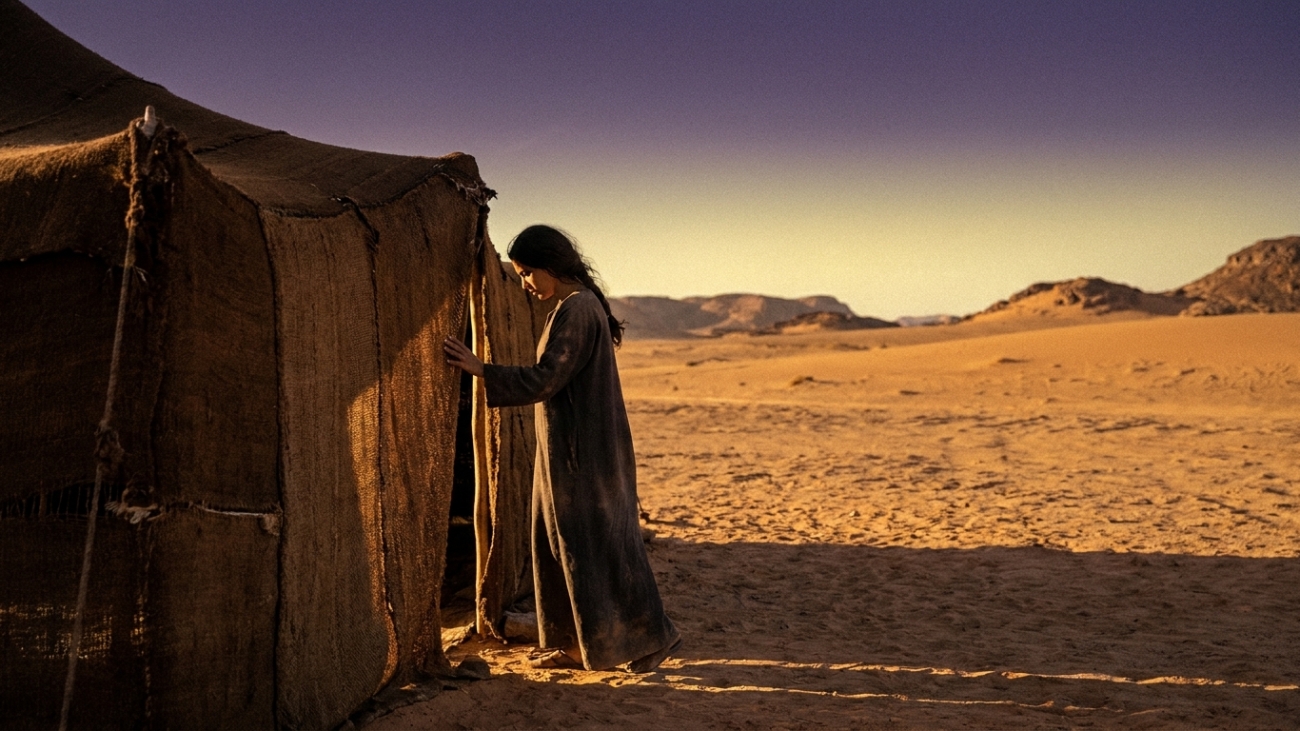
The Sarah Shift

When You Have Prayed for a Spouse and Started to Wonder If Marriage Is Even for You… (What Is Actually Happening at the Deep Place, and What Changes)

There is a version of this you do not say out loud very often.

The version where you genuinely believe in marriage, believe in its goodness, believe God designed it, believe it is a gift and a calling for most people, and also, quietly, in a part of your inner world that does not get much airtime, have started to believe that it is probably not for you specifically.

Not dramatically. Not with bitterness, or at least not primarily. More like a gentle, private accommodation. A quiet filing of the hope into a more theoretical category. You still mention it in prayer sometimes. But the way you mention it has changed. It has become more careful. More guarded. More past the point of the urgent, present-tense asking that you did when the hope was fresh.

You have been to the weddings. You have been the bridesmaid. You have smiled at the engagement announcements and meant the congratulations and driven home in a particular kind of quiet that you do not describe to most people.

You have had the seasons of believing powerfully. The prayer warriors who spoke over you. The scriptures that seemed directly addressed to your situation. The conference moments when something rose in you that felt unmistakably like faith for this specific thing.

And then nothing happened. Or nothing continued to happen. And over time, without a single dramatic moment of giving up, without deciding to stop believing, the governing conviction of your inner world quietly shifted.

From “God will provide a spouse” to “God provides for most people” to “God has a plan for my life that may or may not include this” to something that functions, in practice, like: this is probably just not for me.

This post is for that shift. Not to tell you to believe harder. To tell you precisely what happened, why it happened, and what actually changes it.

The Hope That Became a Theory

There is a distinction that matters enormously in this conversation, and most teaching about singleness and waiting never names it clearly:

There is a difference between believing in marriage as a theological proposition and holding a present-tense, governing, Layer Three conviction that God intends it for you specifically.

Most believers in a prolonged marriage waiting season still hold the first. They believe in marriage. They believe God is good and provides good gifts. They believe the scriptures about companionship and covenant and the goodness of partnership.

What has eroded, quietly, predictably, without any single identifiable moment of collapse, is the second. The specific, personal, present-tense conviction that this promise is actively in play for them. That God intends it for them and is working toward it in ways the silence does not currently confirm.

――  “The hope has become a theory. It lives in the mind as a theological position. But it no longer governs the inner world as a present-tense conviction about their specific situation.”  ――

This is not faithlessness. This is not bitterness. This is not the result of insufficient spiritual discipline. This is what happens at Layer Three, the deep, governing, Proverbs 23:7 level of the inner world, when the gap between the hope and its fulfillment stretches long enough on borrowed supply.

The borrowed supply ran out. The Sunday morning believing was sustained by the collective faith of the room. The conference hope was borrowed from the speaker’s certainty. The prayer warrior’s word was genuine and well-intentioned, but it was their firsthand word, not yours. And secondhand faith, however real, however valued, has a ceiling. And the ceiling is lower in prolonged waiting seasons than in easy ones.

What has formed in the silence is the marriage equivalent of the Genesis 16 mentality. Not “The LORD has prevented me from bearing children.” But its equivalent in the language of this particular waiting:

“This is probably just not for me.”

How the Genesis 16 Mentality Forms in the Marriage Waiting Season

The formation arc is identical to every other prolonged waiting season. It does not announce itself. It does not happen in a single moment. It moves through stages that feel, at each transition, like wisdom rather than erosion.

Stage One  The expectation season.

The hope is fresh and present-tense. You pray specifically, confidently, with the kind of faith that does not yet know what prolonged silence feels like. You believe God will provide. You are looking for it. You hold the hope actively at Layer Three as a governing, daily-orienting conviction about your near future.

Stage Two  The confusion season.

Time has passed and nothing has moved in the direction the hope was pointing. A question enters the inner world that was not there before: why hasn’t this happened? You are still believing, but the belief now requires effort. Layer Two has started running questions that Layer One’s declarations are struggling to keep pace with.

Stage Three  The explanation season.

The mind begins constructing reasons for the silence. Maybe God is working on me first. Maybe there is preparation that needs to happen. Maybe the person is not ready yet. Maybe I am not ready yet. These explanations are not unreasonable, they are genuine attempts to make peace with a silence that has no other offered explanation. But they are also the beginning of Layer Three accommodation.

Stage Four  The accommodation season.

The hope is no longer a present-tense, governing conviction. It has been filed under “something God may have for me eventually” or “a desire I hold loosely” or “something I trust God with.” These phrases are not wrong in themselves. But the shift from the active, expectant, Layer Three believing of stage one to the theoretical, loosely-held hoping of stage four is significant. And it is this stage four position that most believers in a prolonged marriage waiting season are actually living from, while performing the stage one vocabulary on Sundays.

Stage four is not the end. It is not a permanent condition. It is not evidence of spiritual failure or insufficient faith. It is the predictable, natural, honest outcome of a Layer Three conviction that has been sustained too long on secondhand supply without the firsthand encounter that refreshes it at depth.

The treatment is not returning to stage one declarations. It is not performing the certainty that stage four no longer holds. It is the encounter that reaches Layer Three and replaces the accommodation with a governing conviction that holds because it was personally received rather than borrowed.

What Ruth’s Story Teaches the Marriage Waiting Season

Of all the biblical stories that speak to the marriage waiting season, Ruth’s maps most precisely onto the experience of the believer in prolonged singleness, because it involves the most ordinary, least dramatic, most faithfully-maintained posture of any waiting season character in Scripture.

Ruth’s situation at the beginning of her story is not just singleness. It is singleness compounded by widowhood, by the loss of the life she had built, by relocation to a country where she was a foreigner, and by a level of material poverty that required her to glean in fields behind the harvesters for survival. The external evidence of her situation pointed consistently away from any future that included the kind of partnership and security she had lost.

And yet the text records no moment of dramatic declaration on Ruth’s part. No confession of faith for a husband. No prayer gathering. No moment where she performed impressive spiritual certainty about a future that her circumstances gave her no reason to expect.

What the text records is faithfulness and proximity. She stayed near Naomi. She stayed near the work available to her. She stayed in the field that provided for her and Naomi’s survival. She was present, near, faithfully occupying the ordinary space in front of her, and that faithfulness and proximity put her in the field of Boaz on the exact morning that changed everything.

――  “Ruth did not manufacture the encounter with Boaz. She simply stayed near enough to the ordinary work of her life that when the encounter arrived, she was in the field.”  ――

This is the tent door posture applied to the marriage waiting season. Not performing certainty about a future the circumstances do not confirm. Not declaring a husband into existence. Simply staying near — near to God, near to the ordinary faithful work of life, present and available in the ordinary places where encounters arrive.

Ruth’s encounter with Boaz was not dramatic. He noticed her. He asked about her. He extended grace and provision. And from that ordinary morning in an ordinary field, the entire trajectory of her story, and the genealogy of David and ultimately of Christ — turned.

The field mattered. Not because Ruth performed anything impressive in it. Because she was in it. Present. Near. Available to be noticed by the one whose noticing would change everything.

The Specific Damage the Waiting Season Does to Marriage Faith

The marriage waiting season has a particular quality of pain that other waiting seasons do not always share, and it is worth naming precisely because the damage it does to the governing conviction at Layer Three is specific rather than general.

The Comparison Wound

Every wedding invitation, every engagement announcement, every pregnancy announcement that follows a wedding, each one is experienced not only as joy for the other person but as a quiet, involuntary measurement. A data point in the ongoing inner calculation of whether this is moving for you or not. Over time, the accumulation of those data points, even when each one is genuinely celebrated, builds a Layer Three case against the personal promise. The evidence is not absolute. But it is consistent. And Layer Three responds to consistent evidence.

The Performance Wound

The Christian single in a prolonged waiting season is often surrounded by well-meaning community that offers a particular kind of comfort: be content. Be whole in God. Do not make this an idol. Trust His timing. All of these things are true. And all of them, when offered repeatedly in the context of a specific unmet longing, function to suppress the honest inner expression of that longing rather than bringing it to God. The result is a person who has learned to perform contentment and wholeness at Layer One while the actual governing conviction at Layer Three runs something quite different.

The Age Wound

Unlike most waiting seasons, the marriage waiting season carries a biological and social clock that adds a dimension of urgency the waiting can ill afford. Every year that passes is not only another year of silence, it is, in the mind’s calculation, another year of narrowing possibility. This produces a particular kind of Layer Three pressure: the accumulating evidence is not just about the absence of the promise but about the closing of the window in which the promise could realistically arrive. And Layer Three responds to that pressure by accommodating earlier and more completely than it might in a different kind of waiting season.

These three wounds compound the standard Layer Three erosion that all prolonged waiting seasons produce. They make the marriage waiting season one of the most complex and most underserved in the Christian content space. And they make the encounter that reaches Layer Three more urgently needed here than in almost any other context.

What Actually Reaches the Deep Place in the Marriage Waiting Season

The same mechanism that changes the governing conviction in any other waiting season changes it here. The encounter, the direct, personal, firsthand word from God that addresses the specific situation rather than speaking in general terms about His goodness, is what reaches Layer Three and replaces the stage four accommodation with a present-tense, governing conviction.

But in the marriage waiting season, the encounter has a specific quality that is worth naming. Because the comparison wound, the performance wound, and the age wound have combined to produce a Layer Three that is more defended against hope than in most other waiting seasons. The person has learned, over years of genuinely trying to believe, that allowing themselves to hope at depth is costly when the hope is not confirmed.

The encounter that reaches a defended Layer Three is not the generic encouragement that God is good and His timing is perfect. It is the word that is so specific, so addressed to this person’s actual situation, the actual shape of their longing, the actual length of their waiting, that the specificity itself bypasses the defense.

Sarah’s encounter at the tent door worked not because it said “God is faithful” in general terms. It worked because it named her, named her situation, named her timeline. The specificity was the evidence that the word was not borrowed, not generic, not someone else’s encouragement extended in her direction. It was addressed to her. And at that level of address, the Layer Three defense could not hold.

This is what the tent door posture is for in the marriage waiting season. Not to manufacture certainty. Not to perform hope that stage four no longer holds. To position the self, honestly, consistently, without pretense, near enough to the presence of God that a word of that specificity can arrive and land at the depth it was designed to reach.

The marriage waiting season does not need more declarations about a spouse.

It needs the encounter that addresses the person waiting, by name, in their specific situation, with the specificity that only a firsthand word carries.

The Tent Door Posture for the Marriage Waiting Season

Proximity — staying near God in your actual condition

Not in the condition you believe you should be in before God will take the request seriously. Not in the condition of stage-one certainty that stage four no longer holds. In your actual current condition, the stage four accommodation, the defended hope, the honest exhaustion of a person who has been carrying this for longer than they planned.

Ruth did not wait until her circumstances looked more promising before she went to the field. She went in poverty, in widowhood, in the position of a foreigner gleaning behind harvesters. Her actual condition did not disqualify her from the field. And your actual condition does not disqualify you from the tent door.

Honesty — naming the stage four conclusion without shame

The performance wound has taught most believers in this season to manage the honest inner world into a more theologically appropriate presentation before bringing it to God. The tent door posture inverts that. It brings the honest inner world, the stage four accommodation, the private “probably not for me,” the guarded hope, the comparison wound, directly into God’s presence without editing.

Hannah brought her grief to the temple in its raw, unmanaged form. She wept so honestly that Eli mistook her prayer for drunkenness. The encounter that followed did not arrive despite that honesty. It arrived through it. Your unmanaged, unedited, honestly-stated inner world is not a barrier to encounter. It is the condition in which encounter most often comes.

Stillness — creating space for the specific word to arrive

The noise of the marriage waiting season is relentless: social media engagements, wedding seasons, well-meaning community advice, the internal noise of comparison and calculation. The specific, personal word that reaches Layer Three does not compete with that noise. It arrives in the stillness that follows it.

Creating deliberate spaces of stillness, not performing quiet, but actually being quiet, actually removing the noise for long enough that a word of specific address can land, is the most active thing a person in the marriage waiting season can do. Not because it guarantees the encounter on a schedule. Because it creates the condition in which the encounter can be heard when it comes.

Receiving — letting the word land without immediately explaining it away

The defended Layer Three of the marriage waiting season has developed a reflex: when something that feels like hope arrives, immediately find the reason it does not mean what it seems to mean. The testimony that moved you in church on Sunday is explained away by Monday morning. The scripture that seemed addressed to you is reframed as a general promise that applies to everyone. The sense in prayer that something specific was being said is explained as wishful thinking.

The posture of receiving simply chooses, in the moment when something arrives with the quality of personal address, not to immediately reach for the explanation. To let it land. To write it down. To hold it long enough to find out whether it holds under the weight of the ordinary week.

Frequently Asked Questions

Is it wrong to deeply want to be married as a Christian?

No. The longing for partnership, companionship, and covenant love is not a spiritual deficiency or an idol to be managed. It is the natural expression of a design that Scripture explicitly affirms: it is not good for man to be alone. Genesis 2:18 does not describe the desire for partnership as excessive or spiritually problematic. It describes it as the observation of the Creator Himself. The longing is not the problem. The problem being addressed in this post is what prolonged waiting does to the governing conviction about whether that longing will be fulfilled for this specific person, not the longing itself.

How do I know if God is calling me to singleness or if I am just in a prolonged waiting season?

This is one of the most important and most honestly difficult questions in the marriage waiting conversation. The biblical gift of celibacy, as described in 1 Corinthians 7, is characterized not primarily by the absence of a spouse but by the presence of a specific grace for that particular life. The person genuinely called to celibacy does not typically experience the prolonged, painful, stage-four accommodation described in this post. They experience a different kind of peace with singleness, not the managed, performed contentment of someone suppressing a deep longing, but the genuine, grace-given orientation toward a life structured differently. If you are reading this post and recognizing yourself in the stage four description, the probability is high that you are in the waiting season rather than in the celibacy calling.

Is it wrong to pray for a specific type of spouse or specific qualities in a partner?

Specificity in prayer is not presumption. It is the natural expression of a person bringing their actual self, with actual needs, actual experiences, actual understanding of what a healthy partnership requires for them, to God honestly. The alternative, generic, non-specific prayer born from a belief that being too specific is somehow less spiritual, is not more faithful. It is less honest. Hannah prayed specifically. She asked for a son. She named the specific thing she needed. And the specificity of her prayer did not presume on God’s sovereignty. It expressed the genuine interior of a person bringing their real longing directly to a God who already knew it.

What do I do with the comparison pain that comes from attending weddings and seeing engagements?

The comparison pain is real, it is not spiritually deficient, and it does not require management into a more theologically acceptable form before it is brought to God. What it requires is the same thing every wound of the marriage waiting season requires: honest presentation to God rather than suppression from Him. The Layer Three accommodation forms fastest in the dark, in the space between what is actually happening in the inner world and what is being presented. Bringing the comparison pain directly, honestly, and without editing into prayer is not weakness. It is the most faithful thing you can do with it. And it is the condition that most consistently creates the space in which the encounter arrives.

How does The Sarah Shift framework apply to waiting for a spouse when it was originally written about childbirth?

The Genesis 16 mentality, the Layer Three governing conclusion that God has prevented me specifically in this area, forms identically in the marriage waiting season as it does in the infertility waiting season. The mechanism is the same: prolonged silence depletes the secondhand faith supply, the mind resolves the resulting tension by arriving at an accommodation conclusion, and that conclusion settles into Layer Three where declarations and discipline cannot reach it. The treatment is also the same: the firsthand, personally-addressed encounter that reaches Layer Three and replaces the governing conclusion. The Sarah Shift framework applies to every situation in which this mechanism operates, and the marriage waiting season is one of the most common contexts in which it does.

The Framework Built for Every Waiting Season

The Sarah Shift framework was built around Sarah’s story, but the mechanism it addresses is universal. Whether you are waiting for a spouse, a child, a calling, a breakthrough, or a restoration, the Genesis 16 mentality forms the same way, and the encounter that replaces it is accessed through the same tent door posture.

The Sarah Shift — The 6-Part Ebook

Six chapters mapping the complete journey from the Genesis 16 mentality to the Hebrews 11:11 governing conviction, for every believer in every waiting season.

Instant PDF download. Theologically precise. Emotionally honest.

→ thesarahshift.com/ebook

The Sarah Shift — The 6-Week Course

The complete structured journey, day by day, week by week, from naming your stage four conclusion to positioning for the encounter that replaces it at Layer Three.

For the believer in any waiting season who is ready to position for encounter rather than manage the silence.

→ thesarahshift.com/course

The Sarah Shift Podcast walks the complete framework in audio form, available on Apple Podcasts and Spotify. Search: The Sarah Shift Podcast.

→ Search: The Sarah Shift Podcast

A Final Word for the Believer Who Has Started to Wonder

The quiet wondering, the private, stage-four accommodation that says this is probably just not for me, is not your final word. It is not evidence of insufficient faith. It is the honest, predictable, natural response of a Layer Three conviction that has been sustained too long on borrowed supply.

Ruth was in a foreign field gleaning behind harvesters when the man who would change everything noticed her. She was not performing impressive faith. She was not declaring a husband into existence. She was simply near, present to the ordinary work of her ordinary day, faithful in the space directly in front of her, available to be seen.

The encounter that breaks the stage four accommodation does not require you to return to stage one certainty first. It does not require you to perform the hope that the waiting has worn down. It requires the same thing it required of Ruth: faithful presence to the ordinary space in front of you, honest engagement with God in your actual condition, and the quiet posture of someone who has not stopped being near even when the nearness has stopped feeling productive.

Stay near. Stay honest. Stay in the field.

The encounter that changes Layer Three is not conditional on the performance of a certainty you do not currently hold. It is available to you in your actual condition, in the stage four accommodation, in the defended hope, in the quiet wondering that this post has been about from the beginning.

It was available to Sarah at the tent door. It was available to Ruth in the field. It is available to you.

The hope that became a theory can become a governing conviction again.

Not through a better declaration.

Through the encounter that addresses you by name.

Stay near the tent door.

The tent door is open.

thesarahshift.com

Untitled design

When God Called You But Nothing Has Moved – The Faith Problem Nobody Names For The Believer Waiting On Their Calling…

You know what God called you to do.

Not because someone told you. Not because it seemed like a reasonable career path. Not because it made logical sense given your background or your resources or your current circumstances. You know because of a moment, or a series of moments, in which something landed on you that was unmistakably not your own idea. A word in prayer. A scripture that found you before you found it. A clarity that arrived uninvited and then refused to leave.

You know what you were called to. You have known it for years.

And nothing has moved.

Not dramatically moved. You have not lost faith in God. You have not stopped believing in the general sense. You still pray. You still worship. You still show up.

But somewhere in the gap between the clarity of the calling and the continued absence of the confirmation, something in your inner world has quietly shifted. The way you talk about the calling has changed. The energy you once carried when you mentioned it has become a more careful, more guarded thing. You have learned not to tell too many people, because explaining why it has not happened yet is exhausting. You have learned to say “when God opens the door” with a voice that sounds less certain than it used to.

And privately, in the place where the honest thoughts live, a question has formed that you would not say out loud in most company: what if I misheard?

This post is about that question. And about what is actually happening in the believer who is living between a calling that was unmistakably real and a confirmation that has not arrived on any schedule they expected.

The Calling That Arrived Before the Confirmation

Here is the pattern the Bible establishes about calling, and it is worth naming clearly because it is almost universally the opposite of what people expect:

In Scripture, the calling almost always arrives long before the confirmation. The gap between them is not an accident or a delay in God’s administration. It is the primary environment in which the person being called is formed into the one who can actually carry what they were called to.

――  “The calling is given to the person you are. The confirmation is given to the person the gap is forming you to become.”  ――

Joseph received his calling at seventeen, a dream so specific and so certain that it needed no interpretation. The calling was unmistakable. And then thirteen years of slavery and imprisonment followed before the calling became visible reality.

Jeremiah was told he was known and consecrated and appointed as a prophet before he was formed in the womb, the calling preceded even his birth. And his prophetic ministry was marked by decades of speaking to people who would not listen, delivering messages that produced no visible result, and asking God with increasing honesty why he was called to something that appeared, from every external measure, to be failing.

Paul received his calling on the Damascus road, dramatic, undeniable, personally addressed. And then he spent approximately three years in Arabia, largely unheard of, before his public ministry began. The calling was real from the first moment. The confirmation took years.

The gap between calling and confirmation is not unusual in the biblical narrative. It is the norm. And what happens in a person during that gap, specifically what happens to the governing conviction at Layer Three, is the most important and least-discussed aspect of the calling journey.

What the Gap Does to the Calling Believer

There is a specific internal arc that happens in the believer who carries a calling through a prolonged confirmation gap. It does not happen dramatically. It happens the way the tide goes out, gradually, quietly, without a single identifiable moment of collapse.

Stage One  The certainty season.

The calling arrives and everything feels aligned. The certainty is effortless. You talk about it freely. You pray about it with confidence. You take preliminary steps. You tell people. The Layer Three conviction and the Layer One declaration are in complete agreement, you believe what you say you believe, and you believe it at depth.

Stage Two  The waiting season.

The doors you expected to open have not opened. The connections you thought God would provide have not materialized. The timing that seemed obvious in the season of clarity has passed without confirmation. You are still believing, but the believing now requires effort it did not require before. Layer One is still declaring. Layer Two is beginning to run questions the certainty season never produced.

Stage Three  The revision season.

You begin to revise your understanding of the calling. Maybe you misunderstood the timing. Maybe the specific form of the calling was different than you understood. Maybe there is preparation work you have not done. These are not unreasonable conclusions, they are the mind’s attempt to make sense of the gap. But they are also the beginning of Layer Three beginning to accommodate to the silence.

Stage Four  The accommodation season.

The calling is still real, you still believe it happened, still believe it was God, still hold it somewhere in your inner world. But it has been filed. Moved from the active, governing, daily-orienting conviction of Layer Three to a more theoretical category. You might describe it as “something I believe God has for me eventually” rather than the burning, present-tense certainty of the first season. The practical decisions of your daily life are no longer oriented by it in the same way. You have accommodated to its absence.

Stage four is the calling equivalent of Genesis 16. Not the abandonment of the promise. Not faithlessness. The accommodation of a person who has concluded, quietly, reasonably, in the absence of anything dramatic to blame, that the active fulfillment of this calling is not currently in play.

And the most important thing to understand about stage four is that it does not feel like a spiritual failure. It feels like maturity. Like realism. Like the appropriate adjustment of a responsible adult who has learned not to live in the clouds.

That is what makes it so difficult to diagnose. And so important to name.

The Genesis 16 Mentality in the Calling Season

In the language of The Sarah Shift framework, what we have just described is the Genesis 16 mentality applied to calling rather than childbirth.

Sarah said: the LORD has prevented me from bearing children. She did not say it in rebellion. She said it as a settled, reasonable conclusion about her specific situation, arrived at after years of faithful waiting without visible movement.

The calling believer in stage four has arrived at the equivalent sentence. It may sound like any of these:

“Maybe I misheard the original word.”

“God has something different in mind for me than what I thought.”

“Perhaps this calling is for later, maybe much later.”

“I think I need to be more realistic about what is actually possible.”

“God’s plan for my life is probably different from what I believed it was.”

None of these sentences are necessarily wrong. God does redirect. Callings do develop differently than the original vision suggested. Timing does differ from expectation. Humility and realistic self-assessment are genuine virtues.

But there is a difference between a humble, Spirit-led revision of the specific form of a calling and the quiet, Layer Three accommodation of a governing conclusion that the calling itself is no longer active. And the person living in stage four often cannot tell which one they are in.

The diagnostic question is this: when you think about the calling — not the specific form it might take, not the timeline, not the mechanism, but the core of it, the thing God unmistakably placed in you in the season of certainty, does your inner world respond with a settled, present-tense conviction? Or does it respond with a gentle, theoretical, past-tense belief that something like that was once true?

If the answer is the second, you are in stage four. You are in the calling equivalent of Genesis 16. And the treatment is not a better strategy or a more realistic assessment of your circumstances. It is the encounter that replaces the governing conclusion at Layer Three.

What Joseph’s Silence Teaches the Calling Believer

Of all the biblical calling stories, Joseph’s maps most precisely onto the experience of the believer in the confirmation gap, because it is the longest, the most concrete, and the least resolved by anything Joseph did or did not do.

Joseph received a calling at seventeen. The calling was specific, visual, symbolic, and unmistakable. He did not construct it. He did not manufacture it through discipline or declaration. It arrived.

And then it went silent for thirteen years.

Thirteen years in which the external evidence pointed consistently against the calling rather than toward it. Every circumstance that accumulated in those years, slavery, false accusation, imprisonment, being forgotten by the cupbearer, was more consistent with the calling being wrong than with it being real.

――  “The circumstances in Joseph’s confirmation gap were not neutral. They were actively contradictory. And yet the calling held — not because Joseph performed impressive faith, but because he stayed present to the work directly in front of him while the gap ran its course.”  ――

The text does not tell us Joseph spent thirteen years declaring the dream every morning. It does not record him confessing it consistently or fasting regularly for its fulfillment. What it records is him doing the work present to him, serving faithfully in Potiphar’s house, managing the prison well, interpreting dreams with the gift he carried, without evidence that any of it was moving him toward the visible fulfillment of what he had seen at seventeen.

And then, at the right moment, a single encounter changed everything. Pharaoh’s dream. Joseph’s interpretation. A word that was so specific, so directly connected to the gift Joseph carried, so precisely timed that it moved him from a prison cell to the second-highest position in the most powerful nation on earth in a single day.

The gap did not wasted Joseph. It formed him into the person who could carry what the calling required. And the encounter that ended the gap did not arrive because Joseph finally performed the right spiritual practice. It arrived because the gap had done its work and the time had come.

What the Calling Believer Actually Needs

The most common advice given to the believer in the confirmation gap is strategic: work on your craft, build your platform, make connections, develop your skills, position yourself.

All of those things have genuine value. Preparation in the gap is a real and important part of calling stewardship. Joseph was not passive in the gap, he served, he managed, he used what he had where he was.

But strategy does not reach Layer Three. And if the governing conviction at Layer Three has quietly shifted from active calling to theoretical past-tense belief, no amount of platform building will replace what has been lost at the foundation.

What the calling believer in stage four actually needs is the same thing Sarah needed in Genesis 16. Not a better plan. Not a revised timeline. Not a more realistic assessment of their circumstances.

A direct, personal, firsthand encounter with the voice of God that addresses the calling specifically, not in general terms, not through someone else’s word over their life, but in a way that reaches the layer where the accommodation has formed and replaces it with a governing conviction that holds regardless of the external evidence.

The calling did not change.

The confirmation gap changed the governing conviction about it.

And a Layer Three conviction is only replaced by a Layer Three encounter.

The Tent Door Posture for the Calling Believer

The tent door posture, the posture that positioned Sarah to receive the encounter that changed her Layer Three conviction — applies directly to the calling believer in the confirmation gap.

Proximity means staying near the calling. Not performing confidence about it. Not announcing it to rooms of people. Simply staying close to it, continuing to develop the gift, continuing to show up in the spaces where the calling operates, staying in the vicinity of the thing God placed in you even when the confirmation has not arrived.

Presence without performance means engaging with the calling from your actual current condition rather than the condition you believe you should be in before the calling can move forward. Joseph did not wait until his circumstances looked right before using his gifts. He used them in the prison, in the household, wherever he was. The calling did not require the confirmation to be active.

Stillness means creating the conditions in which the specific, personal, firsthand word about the calling can arrive and be received. The confirmation gap produces noise, internal noise from the stage four conclusions, external noise from well-meaning people with opinions about your timeline. Deliberate stillness cuts through both.

Honest reception means resisting the reflex to explain away a word when it arrives. The stage four calling believer has learned to protect themselves from hope, has learned to be careful about what they let themselves believe about the calling because disappointment is costly. When the word comes, the first instinct is to immediately find the reason it probably does not mean what it seems to mean. Honest reception simply chooses, in that moment, not to reach for the explanation before the word has had a chance to land.

The Question Underneath the Question

Most believers in the confirmation gap are not actually asking “when will my calling be fulfilled?”

They are asking a deeper question that the calling question is standing in for:

――  “Did God actually say what I thought He said? And if He did — does He still mean it for me?”  ――

This is the question that lives at Layer Three. And it cannot be answered by a timeline, a strategy, a revised plan, or another person’s encouragement. It can only be answered by the same God who said it the first time, saying it again, personally and specifically, in a way that reaches the layer where the doubt has formed.

This is what the tent door posture is for. Not to manufacture the answer. To position you near the place where the answer arrives, and to keep you there honestly and consistently until it does.

The calling is not cancelled because the confirmation is delayed. Joseph’s dream did not expire in prison. Jeremiah’s appointment did not lapse in the decades of unheard prophecy. Paul’s Damascus road encounter did not become irrelevant in the years of Arabia.

The gap is not the end of the calling. It is the formation of the one who will carry it. And the encounter that breaks the silence of the gap, the word that reaches Layer Three and replaces the stage four accommodation with a present-tense, governing, Hebrews 11:11 conviction, is available. And closer than the length of the gap makes it feel.

Frequently Asked Questions

How do I know if I misheard the original calling or if I am just in the confirmation gap?

The distinction is rarely found in the external circumstances, both a misheard calling and a delayed confirmation can look identical from the outside for long periods. The more reliable indicator is the quality of the original word. If the calling arrived with the specificity and unmistakable quality of something that was not your own idea, if it came before you wanted it, before it was convenient, before it made strategic sense, the probability is high that it was genuine. A calling you constructed from your own ambitions tends to be specific about the outcomes. A calling God gave tends to be specific about the person being called and the nature of the assignment, with the outcomes left in His hands. The honest question is not whether your circumstances look right. It is whether the original word had the quality of something that arrived rather than something you built.

Is it wrong to feel like giving up on a calling that has not moved?

No. The feeling of wanting to give up on a delayed calling is one of the most honest and most common experiences in the calling journey — and it is well documented in Scripture. Jeremiah explicitly asked God why he was born and called to something that appeared to be failing. Elijah, at the peak of his prophetic ministry, sat under a tree and asked to die. The feeling of exhaustion with the gap is not evidence of insufficient calling. It is evidence of a human being carrying a real promise through a real silence for a real length of time. The question is not whether the feeling is wrong. The question is what you do with it. Bringing it honestly to God rather than managing it away from Him is always the more generative direction.

Should I keep talking about my calling while I am waiting for the confirmation?

This is a question of wisdom rather than faith. There is a version of continuing to speak about the calling publicly that is rooted in genuine Layer Three conviction and functions as a testimony to the faithfulness of God. There is another version that is rooted in the need to perform confidence that does not currently exist at Layer Three, which eventually becomes exhausting and sometimes damaging to credibility. The more useful practice during the confirmation gap is continuing to speak to God about the calling privately and honestly, continuing to develop the gifts the calling requires, and being selective rather than broad about who is in the room when the calling is discussed in detail. Not from shame, but from stewardship.

What is the connection between the calling waiting season and the Sarah Shift framework?

The Sarah Shift framework was built around Sarah’s calling, the promise of a child, but the mechanism it addresses is universal. The Genesis 16 mentality, the Layer Three governing conclusion that God has prevented me specifically in this area, forms in every prolonged confirmation gap regardless of what the calling is. The framework diagnoses that conclusion precisely, maps the four stages by which it forms, and provides the tent door posture framework for positioning toward the encounter that replaces it. Every element of The Sarah Shift applies directly to the believer in a calling confirmation gap.

How does Layer Three faith apply specifically to waiting for a calling?

In the calling context, Layer Three is the governing conviction that the calling is present-tense, active, and certain, regardless of what the external circumstances currently confirm. When the confirmation gap is long enough, Layer Three often shifts from that active conviction to a more theoretical, past-tense belief that something like that calling once existed. The person still believes it happened. They just no longer govern their daily life from it as a present-tense reality. The Layer Three encounter, the direct, personal, firsthand word from God that addresses the calling specifically, is what replaces the theoretical belief with a governing conviction that once again orients the whole inner world.

The Framework Built for Every Confirmation Gap

The Sarah Shift framework was built in the language of childbirth and waiting for Isaac, but the mechanism it addresses is the same in every prolonged gap between calling and confirmation. If what you have read in this post named the stage four accommodation you have been living in, the complete framework is available to walk you through the full journey from that conclusion to the firsthand encounter that replaces it.

The Sarah Shift — The 6-Part Ebook

Six chapters mapping the complete journey from the Genesis 16 mentality to the Hebrews 11:11 governing conviction. Written for the waiting season in every form.

Instant PDF download. Theologically precise. Emotionally honest.

→ thesarahshift.com/ebook

The Sarah Shift — The 6-Week Course

The complete structured journey, day by day, week by week, from naming your stage four conclusion to positioning for the encounter that replaces it.

Built for the believer in any confirmation gap who is ready to position for encounter rather than manage the silence.

→ thesarahshift.com/course

The Sarah Shift Podcast covers the calling waiting season directly in the teaching arc. Search The Sarah Shift Podcast on Apple Podcasts or Spotify.

→ Search: The Sarah Shift Podcast

A Final Word for the Believer in the Confirmation Gap

The calling is not cancelled. The gap is not a verdict. The accommodation your inner world has made to the silence is not the final state of the calling, it is the natural, predictable, honest response of a person who has been waiting long enough on secondhand supply that the Layer Three conviction has quietly shifted.

Joseph did not know, in year seven of the silence, that year thirteen was the hinge. He simply stayed present to the work in front of him, used the gifts he carried in the environments he found himself in, and remained in the posture of someone who had received a word — even when that word was nowhere visible in his circumstances.

And when the encounter came, when Pharaoh’s dream needed interpreting and a word Joseph had been carrying for thirteen years suddenly made sense of everything, it found him in a prison cell. Not on a stage. Not in a position of visible preparation. In the most ordinary, least impressive, least confirmatory place imaginable.

The encounter did not require Joseph to be ready in the way he expected to be ready. It required him to be present. Near. Available. In possession of the thing God had given him, however little the surrounding circumstances suggested it would ever be needed.

Stay near the calling. Stay honest about the gap. Stay in the posture of someone who received a real word from a faithful God.

The confirmation is coming. It always follows the formation.

The calling is not cancelled.

The gap is not a verdict.

It is the formation of the one who will carry what was always promised.

Stay near the tent door.

The tent door is open.

thesarahshift.com

Feature image (1)

Why Your Declarations Aren’t Reaching the Deep Place – and the One Thing That Actually Does

You already know the feeling.

You stand in front of the mirror and say the declaration. You write it in your journal. You repeat it in the car on the way to work. You post it. You pray it. You say it again before you sleep.

And for a while, it works. Something lifts. Hope returns. The word feels true when you say it, and the saying of it seems to reach somewhere real.

Then comes the morning when you notice your own voice has changed. You are still saying the same words in the same order with the same theology behind them. But something in the way you say them has shifted. There is a flatness now. A performance quality. You are saying true things in a voice that no longer quite believes them at depth.

And the guilt that follows is almost worse than the flatness itself. Because if declarations are supposed to build faith, and your declarations have stopped reaching you, the obvious conclusion is that something is wrong with you. That your faith is deficient. That a more spiritually disciplined version of you would not be having this problem.

This post is written to tell you clearly: that conclusion is wrong.

What is happening is not a failure of your faith. It is a mismatch of method. And once you understand exactly what that mismatch is, you will never again mistake exhaustion for spiritual inadequacy.

The Method Is Not Wrong. It Is Incomplete.

Before anything else, let’s be precise about what declarations actually are and what they are designed to do. Because the problem is not that declarations are ineffective. The problem is that they are being asked to do something they were never designed for.

Declarations — spoken confessions of biblical truth, intentional alignment of your words with the promises of God, are a genuinely biblical practice. Romans 10:10 is clear: with the mouth one confesses and is saved. Proverbs 18:21 acknowledges that death and life are in the power of the tongue. Joshua 1:8 instructs that the Book of the Law should not depart from your mouth.

These are not minor texts. The practice of spoken confession is woven through both Testaments.

But here is the precision that most teaching on declarations skips: every one of those texts is describing the outward expression of an inward reality, not the mechanism by which the inward reality is generated.

――  “Declarations are designed to express faith that already exists at depth. They were never designed to create it from scratch, or to replace it when the supply runs out.”  ――

Romans 10:10 says with the heart one believes, and with the mouth one confesses. The mouth comes second. The heart comes first. The confession is the outward expression of the inward conviction, not the tool by which the conviction is installed.

When declarations are used as the primary mechanism for generating deep faith, rather than the expression of deep faith that already exists, they are being asked to perform a function they were not designed to perform. And eventually, the gap between what the mouth says and what the heart actually holds becomes too wide for even the most consistent declaration practice to bridge.

This is not a character flaw. It is what happens when a genuinely good tool is applied to the wrong layer of the problem.

The Three Layers of Your Inner World

To understand why declarations plateau, you need a map of the terrain they are operating on. Most people move through their entire spiritual lives without anyone giving them this map clearly. Once you have it, everything makes sense, the plateau, the exhaustion, and what actually reaches the layer where the real work needs to happen.

Your inner world operates in three distinct layers.

Layer One  The Surface Thought

The intentional, managed, conscious layer. This is the declaration you say out loud. The verse you post. The confession you make in prayer. The statement you make when someone asks how your faith is doing. Layer One is real and valuable. But it is also the layer you have the most control over, which means it is the layer you can perform independently of what is happening in the layers beneath it. A person can maintain an impeccable Layer One practice while their Layer Three is running a completely contradictory governing conclusion.

Layer Two  The Habitual Thought

The automatic layer. This is what your mind does when you stop managing it. The thought loop that runs at 3am when you wake and cannot get back to sleep. The inner monologue during long drives with the radio off. What surfaces in the shower before you have had time to compose yourself into the version of you that makes declarations. Most people live far more of their lives in Layer Two than they realize or are willing to admit. A consistent declaration practice can reach Layer Two, with sustained effort, the habitual thought can be retrained. But Layer Two is not the deepest layer.

Layer Three  The Heart Thought

The governing layer. The deep, settled, identity-level conviction that Proverbs 23:7 is pointing to when it says: as a man thinks in his heart, so is he. Not as he speaks. Not as he declares. In his heart. This is the foundation from which everything else actually operates, the layer that determines not what you say you believe but what you actually are. The Genesis 16 conclusion, ‘the LORD has prevented me’, lives at Layer Three. And Layer Three is not changed by declarations. It is changed by encounter.

Declarations operate reliably at Layer One. With sustained consistency, they can begin to influence Layer Two. But they do not reach Layer Three. Not because they are spiritually deficient. Because Layer Three is not accessible through managed surface activity. It is the layer that responds to encounter, to the direct, personal, firsthand reception of a word that arrives from outside your own thought system and lands at a depth your own effort cannot reach.

This is the mismatch. Declarations are a Layer One tool being applied to a Layer Three problem. And the exhaustion you feel after years of sincere effort with diminishing returns is not the exhaustion of a person who tried the wrong thing. It is the exhaustion of a person who tried the right thing in the wrong layer.

What Proverbs 23:7 Is Actually Saying

“For as he thinks in his heart, so is he.”

— Proverbs 23:7

This verse is quoted frequently in faith circles, usually in connection with the importance of positive thinking and spoken confession. And the connection is legitimate: what you think at depth does determine what you become.

But the precision of the verse is worth examining more carefully, because it carries a specific claim that most surface-level applications miss.

The Hebrew word translated “thinks” here is shaʼar, which means to reckon, to calculate, to govern by an inner estimation. It is the word of an accountant arriving at a final figure, not a person having a passing feeling. And the location is the heart, lev in Hebrew, which in the biblical worldview was not the seat of emotion but the seat of the will, the intellect, and the governing orientation of the entire person.

So the verse is saying: as a person governs themselves from their deepest settled estimation, so they actually are. Not what they say. Not what they perform. What they hold at the governing level of their inner world.

――  “The deep place is not your mouth. It is not your journalled declaration or your posted confession. It is the layer that runs when no one is watching, the settled estimation your inner world actually operates from.”  ――

This is why two people can use the exact same declarations, with the exact same sincerity and consistency, and have completely different outcomes. Not because one has more faith than the other in the surface sense. But because what is happening at Layer Three is different. One person is declaring from a deep, encounter-produced conviction. The other is declaring in the absence of one, hoping the declaration will produce what only encounter can.

The declaration does not reach the deep place. The encounter does. And the encounter is what the declaration was always meant to express.

What Romans 10:17 Is Actually Saying

“So faith comes from hearing, and hearing through the word of Christ.”

— Romans 10:17

This is one of the most quoted verses in the theology of declaration. The reasoning goes: if faith comes by hearing, then speak the word out loud so you can hear it. Declare it to yourself. The hearing produces the faith.

And again, there is genuine truth in this application. Hearing truth does build faith. Spoken confession does have a place in the spiritual life. This is not a wrong reading.

But the verse is doing something more precise than a general endorsement of declaration practice, and that precision changes everything.

The Greek word translated “hearing” is akoē — which carries the sense of active, personal reception of a specific message. It is not passive exposure to truth that exists somewhere. It is the direct reception of a word addressed to you. And the source of that word, the verse specifies, is the word of Christ, the directly transmitted, personally conveyed, living word of God rather than a secondhand report about it.

The faith that Romans 10:17 is describing comes from a direct, personal, firsthand reception of the living word. Not from hearing about someone else’s reception. Not from repeated exposure to a declaration that originates in your own mind. From hearing, your own, directly received, personally addressed.

This is the same distinction Hebrews 11:11 makes when it says Sarah “herself” received power and considered Him faithful. Not through her husband’s hearing. Her own. The akoē of Romans 10:17 in the life of a real woman who had been waiting long enough that the secondhand supply had run completely out.

Declaration says the word.

Encounter receives it.

Declaration operates at Layer One.

Encounter reaches Layer Three.

Both are biblical. Only one changes what you actually are.

Five Diagnoses for the Plateau

If your declarations have stopped reaching you, one or more of the following is almost certainly true. These are not condemnations. They are precise diagnoses, and a precise diagnosis is always more useful than a vague guilt.

Diagnosis One: You are saying it without a Layer Three foundation to say it from.

The declaration is real. The theology is correct. But there is no firsthand encounter underneath it providing the foundation from which it is being expressed. You are declaring in the hope that the saying of it will produce the foundation. But declarations were designed to express an existing foundation, not to substitute for one. The treatment is not a better declaration. It is the encounter that produces the foundation the declaration was always meant to rest on.

Diagnosis Two: The gap between your declaration and your Layer Three has become too wide to bridge.

At Layer Three, the governing conclusion has already arrived: the LORD has prevented me. Or some version of it, this is not for me, this is not happening, this promise is not mine. And the declaration, however sincere and consistent, is operating at such a distance from that conclusion that it cannot reach it. The gap itself has become the problem. And no amount of effort applied to Layer One is going to close a Layer Three gap.

Diagnosis Three: You are running on secondhand faith that has reached its ceiling.

The conviction underneath your declarations is borrowed, sourced in someone else’s encounter, sustained by community energy, kept alive by testimony and corporate worship. All of those things are genuine and valuable. But secondhand faith has a ceiling, and the ceiling is lower in prolonged waiting seasons than in easier ones. You have reached the ceiling. The treatment is not more of the same borrowed supply. It is the firsthand reception that replaces borrowed supply with something that is genuinely yours.

Diagnosis Four: The discipline has become the substitute for the relationship.

This is the most subtle diagnosis. The declaration practice, the fasting, the journaling, the consistency, all of these have become so central to your spiritual identity that they have quietly taken the place of the relational encounter they were originally designed to support. You are doing the practices in the hope that the practices themselves will produce what they were always meant to accompany. The treatment is not abandoning the practices. It is reorienting them from being the thing toward being the posture that positions you for the thing.

Diagnosis Five: You are performing faith rather than positioning for encounter.

There is a specific kind of spiritual effort that looks like faith from the outside but is actually the management of doubt from the inside. You are saying the declaration loudly enough and consistently enough that the doubt does not get too much airtime. And the effort required to maintain that management level is precisely what is exhausting you. The treatment is not a stronger performance. It is the tent door posture, proximity, stillness, honesty, that stops managing the doubt and starts positioning you near the encounter that replaces the conclusion underneath it.

What Actually Reaches the Deep Place

This is the question the entire post has been building toward, and it deserves a precise answer rather than a vague spiritual encouragement.

What reaches Layer Three is encounter. Not a category of experience that bypasses Scripture or discipline or the practices of the faith. A specific kind of reception, the akoē of Romans 10:17, the ‘herself’ of Hebrews 11:11, the Genesis 18 moment when a word arrives that is so personal, so specific, so directly addressed to your situation that it strikes the governing layer of your inner world and disrupts the conclusion that has been living there.

This is not mystical in the sense of being inaccessible or reserved for a special category of believer. Sarah was standing at a tent door doing nothing extraordinary. Hannah was weeping in a temple. Joseph was sitting in a prison cell. Elijah was hiding under a tree, exhausted and asking to die. The encounter found them not in their impressive moments but in their ordinary and sometimes desperate ones.

What they shared was not spiritual performance. It was proximity and honesty. They were near enough to the presence of God, however reluctantly, however exhaustedly, that when the word came, they were positioned to receive it.

The Shift in Posture

The shift from declaration to encounter is not a shift from effort to passivity. It is a shift in the kind of effort, from managing the surface to positioning the self.

Positioning for encounter looks like this:

Proximity — staying near even when it feels one-sided

Not performing nearness. Simply staying in it. Prayer that brings the honest inner world rather than the composed version of it.

Stillness — creating the conditions in which a word can be heard

The encounter almost never competes with noise. It arrives in the quiet that follows. Building deliberate stillness into each day is not passive. It is the most active thing you can do toward Layer Three.

Honesty — naming the Layer Three conclusion without shame

The Genesis 16 conclusion forms in the dark. Naming it honestly, to God, in prayer, in writing, brings it into the light where an encounter can reach it. You cannot position for an encounter that will replace a conclusion you are not willing to acknowledge.

Receiving — not immediately explaining away what arrives

When something lands with the unmistakable weight of personal address, the first instinct of a Layer Three that has been managing disappointment is to explain it down. The posture of receiving is simply choosing, in that moment, to let it land before reaching for the explanation.

These postures do not guarantee a timeline. They do not produce encounter on demand. What they do is place you consistently in the vicinity of the tent door where the encounter arrives, and keeps you there long enough that when the word comes, personally and specifically addressed, you are positioned to receive it rather than too far away or too noisy to hear it.

A Word About Discipline

This post is not an argument against discipline. Let that be clear before we reach the close.

Prayer, fasting, declaration, Scripture reading, worship, journalling, all of these are genuine, valuable, biblically rooted practices. The problem being addressed here is not that Christians do them. It is that Christians are sometimes taught to expect from them something they were never designed to deliver: the Layer Three transformation that only firsthand encounter produces.

Discipline is the posture that keeps you near. Encounter is the word that arrives at depth. And both are necessary, but in the right relationship to each other.

When discipline is oriented toward positioning for encounter rather than substituting for it, it becomes the most powerful thing a waiting believer can do. Not because the discipline itself reaches Layer Three — it doesn’t — but because the consistency of the posture keeps you in the proximity where the encounter finds you.

Sarah stayed near the tent. That proximity, not any particular spiritual performance, is what put her within earshot of the word that changed everything.

――  “Discipline keeps you near the tent. Encounter is what happens when the word arrives at the door.”  ――

Frequently Asked Questions

Are declarations and confessions biblically wrong?

No. Declarations and spoken confessions are genuinely biblical practices with solid scriptural grounding. The issue addressed in this post is not whether to use them but what to expect from them. They are Layer One tools that express and reinforce existing faith. They are not Layer Three tools that generate faith from nothing or replace the governing conviction of the heart. Using them with that understanding is not only appropriate but valuable. Using them as a substitute for the firsthand encounter they were designed to accompany is where the exhaustion comes from.

What is the difference between spiritual disciplines and positioning for encounter?

Spiritual disciplines — prayer, fasting, Scripture reading, worship, silence — are practices that keep you oriented toward God and near to His presence. Positioning for encounter is a specific orientation of those disciplines toward the goal of firsthand reception rather than performance or management. The same practice of prayer can be a performance of faith (managing doubt through consistent declaration) or a positioning for encounter (bringing the honest inner world to God and staying near enough to hear). The difference is not in the external practice. It is in the internal orientation toward what the practice is for.

If declarations don’t reach Layer Three, why does the Bible tell us to confess with our mouths?

Romans 10:10 says with the heart one believes and with the mouth one confesses. The order is significant: heart first, mouth second. The confession is the expression of the heart-level conviction, not the mechanism by which it is produced. Confessing with the mouth what you genuinely believe in the heart is a powerful practice that reinforces and externalizes an existing conviction. Confessing with the mouth in the hope that the confession will produce a conviction that does not yet exist at Layer Three is a different thing entirely, and it is this second use that eventually produces the hollow, performative quality that the post is describing.

How long does it take to have a firsthand encounter with God?

The biblical record does not give a formula or a timeline. What it consistently shows is that encounter arrives not according to a schedule but in response to proximity and honesty. Joseph’s encounter arrived in year thirteen of a prolonged silence. Hannah’s arrived after years of unanswered prayer and one honest, desperate, unpolished moment in the temple. Sarah’s arrived at an ordinary afternoon at a tent door with no advance preparation. The consistent pattern is not duration but posture, staying near, staying honest, staying in the proximity where the encounter can arrive when it comes.

What is the connection between this and The Sarah Shift framework?

The Sarah Shift framework is built on exactly this distinction: the Genesis 16 mentality (the Layer Three governing conclusion that God has prevented me) is not resolved by better declarations or more consistent discipline. It is resolved by the Genesis 18 encounter, the personal, specific, directly-addressed word that reaches Layer Three and replaces the governing conclusion at its root. The entire framework is structured around understanding the three layers, diagnosing which layer the problem lives in, and positioning for the encounter that reaches the layer declarations cannot.

The Framework Built to Walk You There

If this post named the exhaustion you have been carrying, the flatness in your declarations, the performance quality that has crept into your faith practices, the quiet suspicion that something in your method is wrong even though everything you have been told says it should be working, there is a complete framework built to take you from the diagnosis to the encounter.

The Sarah Shift — The 6-Part Ebook

A six-part journey through the Genesis 16 mentality, the three layers of thought, the tent door encounter, and the Hebrews 11:11 governing conviction that replaces everything.

Instant PDF download. Deep, honest, and built for the person who has tried everything else.

thesarahshift.com/ebook

The Sarah Shift — The 6-Week Course

The complete structured journey, day by day, week by week, from naming your Layer Three conclusion to positioning for the encounter that replaces it.

For the believer ready to stop managing the surface and start positioning for the deep place.

thesarahshift.com/course

The Sarah Shift Podcast Episode Two, Why Declarations Have a Ceiling, goes deep into the three-layer framework in audio form. Available on Apple Podcasts and Spotify.

→ Search: The Sarah Shift Podcast

A Final Word

The flatness in your declarations is not evidence that you have failed. It is evidence that you have reached the ceiling of a Layer One tool, and that something deeper is now needed. That is not a regression. It is a diagnosis. And a precise diagnosis is always the beginning of the right treatment.

The treatment is not more effort in the same direction. It is a shift in posture, from managing the surface to positioning the self. From declaring loudly to staying near honestly. From performing faith to standing at the tent door in your actual condition, available to receive the word that arrives at a depth no declaration ever reached.

Sarah’s Layer Three governing conclusion was “the LORD has prevented me.” And it was not replaced by a better declaration. It was struck, disrupted, and replaced by a word so personal and so specific that the only honest response she had was a laugh she could not control.

That laugh was the sound of Layer Three changing.

Yours is coming too.

The deep place is not reached by louder declarations.

It is reached by the word that arrives

when you are near enough to hear it.

Stay near the tent door.

The tent door is open.

thesarahshift.com

Woman_laughing_in_golden_light_202608061042

What Nobody Tells You About Sarah’s Faith: She Doubted. She Laughed. She Denied the Laugh.

And Hebrews 11 Still Called It Faith.

Let’s start with what actually happened in Genesis 18.

Three visitors arrive at Abraham’s tent. A word is spoken about Sarah, personal, specific, timed. She will have a son. This time next year.

And Sarah, standing at the tent door behind her husband, overhears it.

She does not respond with a lifted hand and a quiet “I receive it, Lord.” She does not whisper a tearful “Thank you, I’ve been believing for this.”

She laughs.

Involuntarily. Skeptically. To herself, the text says, but loud enough that it is immediately noticed. And when questioned about it, she lies. She denies the laugh. Because, the Scripture says plainly, she was afraid.

This is the moment Hebrews 11:11 is describing when it says:

“By faith Sarah herself received power to conceive, even when she was past the age, since she considered him faithful who had promised.”

— Hebrews 11:11

By faith.

The same laugh. The same fear. The same denial. Hebrews 11 looked back at all of it and recorded the word “faith.”

If you have spent any time in a waiting season feeling guilty about your doubt, feeling like your fluctuating confidence disqualifies you, like your honest questions are evidence of insufficient belief, like the woman with “real” faith would not feel what you are feeling — this post is the one you have needed for a long time.

The Version of Sarah’s Story Most Teaching Skips

There is a version of Sarah’s story that gets told in most faith contexts. It goes roughly like this: Sarah struggled and doubted and made the mistake of Hagar, but then she came through and her faith was rewarded and Isaac was born and everything was redeemed.

The lesson is usually something about perseverance, or about God’s faithfulness in spite of human failure, or about why you should keep trusting even when your circumstances look impossible.

These are not wrong lessons. But they skip something. Something that is sitting right there in the text, unedited and unexplained, waiting for someone to look at it directly.

Sarah’s faith moment, the one Hebrews 11 immortalized, was not a polished, composed, theologically appropriate response to a promise. It was a laugh. A skeptical, involuntary, slightly disbelieving laugh. Followed by fear. Followed by a denial.

And God did not correct the laugh. He did not revoke the promise because of it. He did not say “when you can receive this without laughing, I will proceed.”

He said: “Is anything too hard for the LORD?” And the promise held.

――  “The laugh did not disqualify Sarah from the promise. It was evidence that the promise had actually reached her — all the way down to the layer where her real governing conviction lived.”  ――

This is the version of the story most teaching skips. Because it is harder to turn into a clean lesson. Because it does not fit the template of faith as unwavering certainty. Because it requires us to hold two things at the same time that we have been taught cannot coexist: genuine doubt and genuine faith.

But they did coexist. In Sarah. In Genesis 18. And Hebrews 11 refused to pretend otherwise.

Understanding What the Laugh Actually Was

To understand why Hebrews 11 calls the laugh faith, you need to understand what the laugh was doing in Sarah’s inner world at that moment.

By Genesis 18, Sarah had arrived at what we call the Genesis 16 mentality, the settled, governing conclusion at the deepest layer of her inner world that this particular promise was not coming. She had not decided this in a dramatic moment of collapse. It had formed slowly, over years of unanswered waiting, until it became the quiet foundation from which she interpreted everything else about her situation.

Then the word arrived. Personal. Specific. Addressed to her by name. Her timeline. Her body. Her son.

And the laugh was what happened when that word collided with the governing conclusion she had been carrying.

The laugh was not the absence of faith.

It was the sound of a Layer Three conclusion being struck by a word precise enough to reach it.

The involuntary, unmanaged, honest response of an inner world being addressed at depth.

You cannot laugh like that at something that has not genuinely reached you.

A word that only lands at Layer One, the surface, managed, performed layer, produces a surface response. A nod. A quiet “thank you, Lord.” An appropriately composed reaction.

A word that reaches Layer Three the deep, governing, identity-level conviction, produces an unmanaged response. Because when something hits the deepest part of what you actually believe, the response bypasses the filter. The laugh escaped before Sarah had time to decide what she was supposed to feel.

That is the laugh Hebrews 11 recorded. Not the laugh of someone who did not believe. The laugh of someone who believed so little, at depth, in the hidden place, at Layer Three, that the word striking her there produced an involuntary collision between what she had concluded and what she was being told.

And the word won.

What the Denial Reveals

When the LORD asks “Why did Sarah laugh?” she denies it. “I did not laugh,” she says.

This is the part most commentators treat as an embarrassing footnote. A moment of weakness. Evidence that even in her faith moment, Sarah fell short.

But look at what the denial is actually evidence of: fear. The text says she denied it because she was afraid. And fear of that specific kind, the fear that comes immediately after something unexpectedly profound has reached you, is not the opposite of faith. It is the response of a person who has been touched at a depth that surprises them.

She was afraid because she recognized, in the moment after the laugh, that something real had just happened. That the word had not bounced off the way the other words had. That it had actually reached her. And the sudden awareness of that depth of reception was terrifying before it was comforting.

The denial was not faithlessness. It was the self-protective reflex of a woman who had been protecting herself from hope for a very long time — and who had just been surprised by it.

Five Things Hebrews 11:11 Is Actually Saying

Most people read Hebrews 11:11 as a simple endorsement: Sarah had faith, and it worked out. But the verse is doing far more than that. Every word in it carries weight that the surface reading misses.

1. “By faith Sarah herself” — the word ‘herself’ is doing enormous work.

The Greek is autos — herself, her own, personally. Not through Abraham’s faith extended to her. Not sustained by the community’s belief on her behalf. Not borrowed from the collective anointing of those around her. Her own. Firsthand. The Hebrews 11 Hall of Faith is not recording a woman who survived her waiting season on secondhand supply. It is recording a woman who, at the tent door, received something directly, and that direct reception is what it is calling faith.

2. “Received power to conceive” — the receiving happened before the conceiving.

The sequence matters. She received something internally before anything changed externally. The power came before the evidence. The shift in her inner world, the Layer Three conviction that replaced the Genesis 16 conclusion, preceded the physical confirmation. Hebrews 11 is recording the internal miracle, not just the external one. The receiving was the faith. Isaac was its confirmation.

3. “Even when she was past the age” — the impossibility is named, not minimized.

Hebrews 11 does not pretend the circumstances were manageable. It names them clearly: past the age. The faith it is describing did not operate by ignoring the reality of the situation. It operated in full awareness of the impossibility. This is a crucial distinction. Biblical faith is not the refusal to acknowledge what the natural evidence shows. It is the governing conviction about God’s character that holds even when the natural evidence is directly contrary.

4. “Since she considered him faithful” — the Greek word for ‘considered’ reveals everything.

The Greek is hegeomai — to lead, to govern, to hold as a ruling conclusion. It is the word of a judge pronouncing a verdict, not a person expressing a passing feeling. She did not occasionally feel like God was faithful on good days. She arrived at a governing conclusion about His character. A verdict that held. This is not performed certainty. It is a settled, deep, layer-three conviction about who God is, one that became the lens through which she interpreted everything else.

5. “Who had promised” — the faith is anchored to character, not circumstance.

She considered Him faithful who had promised. Not: she considered the promise likely to arrive on schedule. Not: she considered the circumstances favorable. She considered Him, the person, the character, the unchanging nature of the God who had spoken. Her faith was not in the outcome. It was in the One who had committed to it. This is the distinction between circumstance-dependent faith and character-anchored faith. The first fluctuates with the evidence. The second holds regardless of it.

What This Means for Your Doubt

If you have been in a waiting season long enough, you have almost certainly felt guilty about something.

Guilty about the questions you have asked. Guilty about the prayers you have stopped praying. Guilty about the testimonies that did not move you the way they used to. Guilty about the laugh, your version of it. The involuntary, unmanaged, honest response that escaped before you could compose it into something more theologically presentable.

The woman with real faith, you have told yourself, would not feel this. She would not doubt this much. She would not be this tired. She would not need this long.

――  “Sarah’s laugh says otherwise. And Hebrews 11’s verdict on that laugh says the same thing louder: your doubt does not disqualify you. It may be evidence that the word is actually reaching you.”  ――

Here is the reframe that this passage makes possible:

What if the doubt you are feeling is not the opposite of faith? What if it is the internal friction of a word that is actually reaching you at depth, colliding with the governing conclusion your inner world has been operating from, and the discomfort of that collision is precisely what genuine Layer Three encounter feels like?

Sarah’s laugh was not comfortable. The collision between the promise and her governing conviction produced an involuntary, slightly chaotic response that she immediately tried to suppress. It did not feel like faith. It felt like confusion. It felt like the conflict between what she had concluded and what she was being told.

Hebrews 11 looked at that confusion and called it faith.

Not because confusion is the goal. But because confusion at depth, the disruption of a settled wrong conclusion by a word precise enough to reach it, is often what the genuine encounter actually feels like before it resolves into the governing conviction that Hebrews 11 is recording.

The Three Permissions Hebrews 11:11 Gives You

Permission One: You are allowed to laugh.

Your involuntary, honest, unmanaged response to the promise does not disqualify you from it. Sarah laughed. Hebrews 11 called it faith. You are allowed to have the response your inner world actually produces when the word reaches you, rather than the response you believe a more spiritually advanced version of yourself would have. Honesty at the moment of encounter is not a failure. It is the evidence that something real has arrived.

Permission Two: You are allowed to be afraid.

Sarah denied the laugh because she was afraid. Fear at the moment of genuine encounter is not a sign that the encounter is not real. It is often the sign that it is more real than you were prepared for. The sudden awareness that a word has actually reached you at depth, that something has moved in the interior that you could not move yourself, is disorienting before it is comforting. You are allowed to be disoriented by the real thing.

Permission Three: You are allowed to hold both.

You are allowed to hold a received word in one hand and genuine uncertainty in the other. Sarah held both. The laugh and the receiving happened simultaneously. The doubt and the faith occupied the same moment. Hebrews 11 did not record the version of Sarah where the doubt was resolved before the faith counted. It recorded the version where both were present, and called it faith anyway. You do not have to wait until the doubt is gone before your faith qualifies.

The Difference Between Performative Faith and Genuine Faith

One of the most damaging things that can happen to a believer in a long waiting season is the development of what might be called performative faith, the practiced, polished, externally appropriate presentation of belief that operates independently of what is actually happening at Layer Three.

Performative faith looks like faith. It uses the right language. It says the right things in the right settings. It produces the right responses at the right moments. And it is completely sustainable, right up until the moment when it costs something the performance cannot cover.

Performative faith

Manages the surface. Produces the correct response. Sustainable in easy seasons. Collapses under sustained pressure because it has no Layer Three foundation.

Genuine faith

Lives at Layer Three. Does not require constant management. Survives silence because it is not dependent on external confirmation. Produced by firsthand encounter, not surface discipline. Looks like Sarah’s laugh, honest, unpolished, and recorded by Hebrews 11 as the real thing.

The invitation of Sarah’s story, read honestly, without the edited version, is not to perform better. It is to stop performing and start positioning. To stop managing the surface and start standing near the tent door where the word that reaches Layer Three can actually find you.

Not because you have gotten your presentation right. Because you have stayed near enough, long enough, honestly enough, for the encounter to arrive and do what no performance ever could.

The Arc Sarah’s Story Is Tracing

Let’s pull back and look at the whole arc, because the laugh makes more sense inside it.

Genesis 16:2

“The LORD has prevented me from bearing children.”

The governing conclusion. Layer Three settled. Accommodation complete.

Genesis 18:12

Sarah laughed to herself.

The encounter arrives. The word strikes the governing conclusion. The collision produces the laugh.

Genesis 21:1–2

“The LORD visited Sarah as he had said, and the LORD did to Sarah as he had promised.”

The external confirmation. The promise fulfilled. The internal shift made visible.

Hebrews 11:11

“By faith Sarah herself received power… since she considered him faithful.”

The verdict. The laugh, the fear, the doubt, and the receiving, all of it, recorded as faith.

The arc moves from a concluded verdict about God’s prevention, to a personal encounter that disrupts the conclusion, to an external confirmation that the internal shift had already anticipated, to a New Testament record that looks back at all of it and calls it faith.

The laugh is not a detour in that arc. It is the moment the arc turns. It is the hinge point between the Genesis 16 mentality and the Hebrews 11:11 mind. And it is marked not by impressive composure but by the most honest, unmanaged, unrehearsed response Sarah ever had.

Frequently Asked Questions

Is it a sin to doubt God during a waiting season?

The biblical record does not treat doubt as sin in the way most faith teaching implies. Doubt is named honestly in the Psalms, in the prophets, in the disciples’ responses to Jesus, and in Sarah’s laugh. What the Bible consistently shows is that doubt brought honestly to God — rather than managed away from Him — is not the end of the relationship. It is often the beginning of the deepest encounter. Sarah doubted at the tent door. Hebrews 11 called it faith. Thomas doubted at the tomb. Jesus showed him His hands. The pattern is that honest doubt, presented directly, becomes the occasion for the encounter rather than the obstacle to it.

Why does God allow doubt in a believer’s journey?

Doubt in a prolonged waiting season is not permitted despite God’s purposes, it is often instrumental to them. It creates the precise kind of interior disruption that makes genuine encounter recognizable when it arrives. A person whose surface faith is perfectly managed has no internal signal to tell them when something has genuinely reached them at depth. The laugh, the involuntary, unmanaged response, was Sarah’s signal that the word had actually arrived at Layer Three. Doubt is often the sensitivity that makes encounter legible.

How can I tell the difference between doubt that leads somewhere and doubt that is just unbelief?

The distinction is in the direction of the doubt. Doubt that leads somewhere stays near God even in its confusion, it asks its questions in prayer, brings its confusion to Scripture, maintains the proximity that makes encounter possible even when the conversation feels one-sided. Unbelief, in the biblical sense, is not the feeling of doubt. It is the withdrawal from proximity, the decision, often gradual, to stop staying near the place where the encounter could arrive. Sarah doubted at the tent door, not from a distance. She was near enough to hear even while uncertain about what she was hearing.

What does ‘she considered him faithful’ actually mean in Hebrews 11:11?

The Greek word translated ‘considered’ is hegeomai, a word that carries the sense of a governing, ruling, concluded judgment. It is not a passing feeling of confidence on a good day. It is the verdict a person has arrived at about the character of the one who made the promise. Sarah’s faith, as Hebrews 11 records it, was not a feeling she maintained through discipline. It was a governing conviction she arrived at, through the encounter at the tent door, through the collision of the word with her existing conclusions, through the laugh and the fear and the receiving, about who God is. And that conviction held through to the fulfillment.

What is the connection between Sarah’s laugh and the Sarah Shift framework?

The laugh is the hinge point of the entire Sarah Shift framework. It is the moment the Genesis 16 mentality, the governing conclusion that God had prevented her, was struck by a word precise enough and personal enough to reach the layer where that conclusion lived. The laugh was the involuntary evidence that the word had landed at depth. What followed, the receiving, the conceiving, the Hebrews 11 verdict, all trace back to that disruptive, honest, unpolished moment at the tent door. The shift was not from doubt to certainty. It was from a concluded wrong verdict to a governing right one, and the laugh was the sound of that transition beginning.

Go Deeper Into Sarah’s Story

If this post gave you permission to bring your honest doubt, your unmanaged responses, and your tired faith directly to the story of Scripture rather than hiding them from it, there is a complete framework built to walk you through the full journey from Genesis 16 to Hebrews 11:11.

The Sarah Shift — The 6-Part Ebook

A six-chapter journey through the full arc of Sarah’s story, from the Genesis 16 mentality to the laugh at the tent door to the Hebrews 11:11 governing conviction.

Theologically precise. Emotionally honest. Instantly downloadable.

→ thesarahshift.com/ebook

The Sarah Shift — The 6-Week Course

The complete structured journey, day by day, week by week, from naming your Genesis 16 conclusion to positioning for the encounter that replaces it.

For the believer ready to stop performing faith and start positioning for the real thing.

→ thesarahshift.com/course

The Sarah Shift Podcast Episode Five, The Laugh That Was Actually Faith, covers this exact passage in full audio teaching. Available on Apple Podcasts and Spotify.

→ Search: The Sarah Shift Podcast

A Final Word for the Believer Who Laughed

If you have had your own version of the laugh, the involuntary, unmanaged, slightly disbelieving response that escaped before you could compose it into something more appropriate, this is what I want you to carry from this post:

Hebrews 11 did not edit it out.

It did not record the version of Sarah where everything was composed and her response was theologically impeccable and she received the promise without any of the friction that tells you something real has landed. It recorded the laugh. The fear. The denial. The whole, honest, unfiltered moment.

And then it called it faith.

Because what God was looking at was not the performance of the surface. He was looking at what had happened at Layer Three, at the deep, governing, identity-level place where the word had actually struck the conclusion and disrupted it. And disruption at that level, however undignified its external expression, is exactly what genuine encounter produces.

Your laugh does not disqualify you.

It may be the most honest thing you have said all year.

She doubted. She laughed. She was afraid. She denied the laugh.

And Hebrews 11 still called it faith.

So can yours.

Stay near the tent door.

The tent door is open.

thesarahshift.com

dsarahshift

Secondhand Faith Has a Ceiling: Why Borrowed Belief Eventually Runs Out, and What Actually Replaces It.

You know exactly what it feels like when faith is working.

The worship reaches you. The sermon lands. The declaration feels true when you say it. Someone shares a testimony and something rises in you that is unmistakably hope, not manufactured, not performed, just there. You walk out of church carrying something real.

And then there is the other kind. The kind that most Christians have experienced but very few have seen named clearly.

The worship is the same. The sermon is good. You say the declaration with the same words in the same order. But somewhere between your mouth and whatever is supposed to be moved by it — nothing. The words land flat. The hope does not rise. You smile at the testimony because you know the right response to a testimony, but inside something stays exactly where it was.

This is not hypocrisy. This is not a character flaw. This is not evidence that you are beyond reach or too far gone or too damaged by disappointment to receive anything anymore.

This is what it feels like when secondhand faith reaches its ceiling.

And once you understand what that ceiling is and why it forms, you will never again mistake it for a personal failing.

What Secondhand Faith Actually Is

Secondhand faith is faith that is sourced primarily in someone else’s encounter with God rather than your own.

It is the faith you carry because of the testimony you heard last Sunday. The conviction that rose in you during worship because the person next to you was weeping and something transferred. The hope that returned after the conference because the speaker’s story was so compelling, so specific, so clearly God, and you borrowed from the authority of their encounter to sustain your own belief.

None of this is wrong. None of it is fake. Testimony is meant to build faith. Corporate worship is designed to be a shared encounter. The body of Christ functions, in part, by carrying one another through the seasons when individual supply runs low.

But here is what most teaching about faith never clearly says:

  “Secondhand faith was never designed to be your primary source. It was designed to supplement a firsthand foundation, not to replace one.” 

When secondhand faith is used as a supplement, it is powerful. When it becomes the primary structure, when the majority of what is sustaining your belief is borrowed from other people’s encounters rather than built from your own, it has a limit. And that limit is not a judgment on your character. It is simply the design of the thing.

A borrowed foundation has a different load-bearing capacity than a built one. It holds in fair weather. It begins to strain under sustained pressure. And in a prolonged waiting season, the kind where the silence stretches past the point where borrowed supply can reach, it eventually runs out.

The Biblical Source of This Distinction

“So faith comes from hearing, and hearing through the word of Christ.”

Romans 10:17

This verse is quoted frequently in faith circles, usually in the context of declaration and confession, speak the word, hear yourself speak it, build your faith. And there is genuine truth in that application.

But notice what the verse actually says. Faith comes from hearing. Not from hearing about someone else’s hearing. Not from secondhand report. From hearing.

Your own. Directly received. Personally addressed.

The Greek word used here is ἀκοή — akoē — which carries the sense of active, personal reception of a message. It is not passive exposure to truth that exists somewhere. It is the direct reception of a word that reaches you. This is not a communal verb applied to the group. It is individual. Personal. Firsthand.

This is why Hebrews 11:11 uses the word “herself” when describing Sarah’s faith. Not “through Abraham.” Not “sustained by the community.” Herself. Her own hearing. Her own reception. Her own firsthand conviction about the faithfulness of the God who had addressed her directly.

That distinction — herself — is not incidental. It is the entire point.

The Three Layers of Thought — and Why It Matters

To understand why secondhand faith has a ceiling, you need to understand where it operates and where it does not reach.

Your inner world functions in three distinct layers. Most people move through their entire spiritual lives without anyone mapping this for them clearly. Once it is mapped, the ceiling makes complete sense, and so does the solution.

Layer One — The Surface Thought

The intentional, managed, conscious declaration. What you say in prayer. What you post. What you confess aloud. What you tell people when they ask how your faith is doing. This layer is real and it is valuable. But it is also the layer you can perform even when the deeper layers are not aligned.

Layer Two — The Habitual Thought

What your mind defaults to automatically when you stop managing it. The thought loop that runs at 3am. What surfaces during long drives. What your inner world does in the shower before you have had time to compose yourself into the version of you that declares things. Most people live far more of their lives in this layer than they realize or admit.

Layer Three — The Heart Thought

The deep, settled, governing conviction that Proverbs 23:7 points to: as a man thinks in his heart, so is he. Not as he speaks. Not as he declares. In his heart. This is the foundation layer, the place from which everything else actually operates. It is also the layer that secondhand faith cannot consistently reach.

Secondhand faith operates primarily at Layer One and, at its most powerful, Layer Two. It can genuinely lift your surface declarations. It can temporarily shift your habitual thought patterns when the supply is fresh. But it does not reliably reach Layer Three — the governing conviction layer, because that layer is not changed by information about someone else’s encounter. It is changed by your own.

This is why the testimony that moved you deeply on Sunday has faded by Wednesday. Not because testimonies are not real. Because testimony is a Layer One to Layer Two tool. It was never designed to produce lasting Layer Three transformation on its own.

And this is why declarations, however sincerely and consistently applied, eventually plateau. They are addressing Layer One with a Layer Three problem. The precision of the method matters as much as the sincerity of the effort.

The Proverbs 23:7 Foundation

“For as he thinks in his heart, so is he.”

Proverbs 23:7

Note the location: the heart. Not the mind in the general sense. Not the mouth. The heart, which in Hebrew understanding referred to the deep, governing, identity-level core of a person, the place from which the will, the emotions, and the fundamental orientation of life operated.

What a person holds at that level determines not what they say but what they actually are. And what they actually are determines what they are capable of sustaining in a long waiting season when the performance becomes too costly to maintain.

The Genesis 16 conclusion — “the LORD has prevented me” — lived at Layer Three in Sarah. It was not a surface thought she could override with a better declaration. It was a governing conviction about her situation that had formed over years of unaddressed silence and settled into the deepest layer of her inner world. No amount of Layer One intervention was going to dislodge it.

Only an encounter could. And that is precisely what Genesis 18 provided.

The Five Signs Your Faith Has Become Secondhand

These signs are not indictments. They are diagnostic tools — the kind of honest self-assessment that makes the difference between cycling through the same spiritual management patterns indefinitely and actually understanding what needs to change.

Sign One: Your faith peaks on Sundays and bottoms out by Wednesday.

If your belief in what God has promised is genuinely strongest immediately after corporate worship and genuinely weakest in the middle of the ordinary week — this is the signature of faith that is dependent on the corporate supply. The encounter refills you. The ordinary days drain you. And over time the refill becomes less effective and the drain becomes more pronounced.

Sign Two: Other people’s testimonies move you but don’t sustain you.

A testimony lands powerfully. Hope rises. Something feels possible again. And then, within days, the lift is gone and the same conclusion has returned. This is secondhand faith doing exactly what it is designed to do, providing temporary supply, but being asked to do something it was not designed for: permanent Layer Three transformation.

Sign Three: Your declarations feel increasingly performative.

There is a specific kind of exhaustion that comes from saying true things in a voice that no longer believes them at depth. The words are correct. The theology is sound. But something in you has learned to say them independently of what you actually hold at Layer Three. This is not hypocrisy, it is the exhaustion of a person doing Layer One work on a Layer Three problem.

Sign Four: You have more faith for other people’s promises than your own.

You can believe powerfully and genuinely for the woman in your prayer group. Her situation feels possible. Your prayers for her carry real authority. But when you turn the same faith toward your own promise, something in the inner world quietly refuses to fully commit. This is because her promise has not been the place where your inner world’s governing conclusion has formed. Yours has.

Sign Five: The silence is winning the argument.

Not overtly. Not dramatically. But quietly, over time, the continued absence of visible movement in your situation has become more persuasive than the word you are standing on. The promise is still true in the abstract. But the silence has started to feel, at Layer Three, like the more reliable evidence of what is actually happening. This is the Genesis 16 mentality in its mature form — and it is the clearest sign that what is needed is not a better declaration but a direct, personal, firsthand encounter.

What Secondhand Faith Cannot Do — and What Replaces It

This is the most important section of this post, and the one most likely to be misread. So let me be precise before we go any further.

Saying secondhand faith has a ceiling is not saying corporate worship is worthless. It is not saying testimony is ineffective, or that the community of faith has no role in sustaining individual belief. All of those things are real, valuable, and genuinely given by God for a reason.

What they cannot do is generate the Layer Three conviction that only firsthand encounter produces. They can support it. They can sustain it in lean seasons. They can remind a person who already has a firsthand foundation of what they already know. But they cannot create it from nothing, and they cannot replace it when it runs out.

What secondhand faith cannot do:

•  Replace the heard-for-yourself conviction that Romans 10:17 describes

•  Permanently shift the Layer Three governing conclusion of your inner world

•  Sustain a believer through prolonged divine silence without increasing depletion

•  Produce the ‘herself’ faith of Hebrews 11:11, the firsthand, personally-received conviction

•  Break the Genesis 16 mentality at its root

What replaces it:

•  A direct, personal, firsthand encounter with God’s voice addressed to your specific situation

•  The kind of word that lands at Layer Three because it was spoken there, not processed down from the surface

•  The Genesis 18 moment: your name, your circumstance, your timeline, spoken in your hearing

•  The akoē of Romans 10:17, the personal, active, firsthand reception of the word

•  The ‘herself’ of Hebrews 11:11, unborrowable, untransferable, genuinely your own

This is not mystical. It is not reserved for a special category of believer with a particular gift or a particular background. The Genesis 18 encounter happened to Sarah in an ordinary afternoon, at a tent door, in the middle of her daily life, without any advance preparation for spiritual impressiveness.

What positioned her was not performance. It was proximity. She was near enough, still enough, and honest enough to receive what was being said about her.

That posture is available to every believer in every season. Including yours.

How to Position for Firsthand Faith

Positioning for firsthand encounter is different from trying to manufacture it. This is a distinction worth holding carefully, because the impulse to turn encounter into a formula is strong, and producing the right formula is exactly the kind of Layer One activity that bypasses the Layer Three change you are actually trying to reach.

What follows are not steps that guarantee an encounter. They are postures that position you near the place where encounter arrives, the same postures visible in Sarah’s story at the tent door, in Hannah’s story at the temple, in Elijah’s story under the juniper tree.

Posture One: Proximity Over Performance

The most important thing you can do is stay near. Near to prayer, even when it feels one-sided. Near to Scripture, even when the words are not currently moving you. Near to God in the ordinary, unimpressive, undramatic daily way that does not feel like spiritual achievement but that keeps you within earshot of the encounter when it arrives.

Sarah was not performing impressive faith at the tent door. She was simply there. In her ordinary condition. Near the household, near the work, near the place where God showed up. Proximity is the primary posture. Everything else is secondary.

Posture Two: Honesty Over Management

The Genesis 16 conclusion forms in the dark. It grows in the space between what is actually happening in your inner world and what you are presenting at Layer One. Naming it honestly, to God, to yourself, to at least one safe witness, is not the abandonment of faith. It is the beginning of the kind of authentic engagement that encounter requires.

Hannah brought her grief, her confusion, and her emptiness directly to God in the temple. She did not manage it first into a more theologically appropriate presentation. She brought it raw. And the encounter that followed did not arrive despite her honesty. It arrived through it.

Posture Three: Stillness Long Enough to Hear

The most common reason people miss the encounter they have been positioned for is noise. Not moral failure. Not insufficient faith. Simply the noise of a life that is too full, too managed, too scheduled, and too distracted to register the quiet arrival of a word that was not announced in advance.

Elijah heard God not in the wind, the earthquake, or the fire, three genuinely spectacular phenomena, but in the still, small voice that followed them. The encounter did not compete with the noise. It came after it. Creating space for that kind of stillness is not passive. It is the most active thing you can do in the service of firsthand faith.

Posture Four: Receiving What Arrives Without Immediately Explaining It Away

Sarah’s laugh was the involuntary, unmanaged response of a Layer Three conviction being reached by a word that was too personal, too specific, too direct to be explained away by her existing conclusions. She tried to explain it away, she denied the laugh when questioned, and the word held anyway.

When something arrives that feels like your name in it, a word in prayer, a scripture that lands with unusual weight, a moment of unmistakable specificity, the first instinct of a mind that has lived in the Genesis 16 mentality is to explain it down. To protect itself from hope by finding the reason the word is probably not what it seems.

The posture of receiving is simply choosing, in that moment, not to immediately reach for the explanation. To let it land. To write it down. To hold it long enough to find out whether it holds.

Frequently Asked Questions

These questions represent the most common points of confusion around faith, encounter, and the distinction between secondhand and firsthand belief.

Is secondhand faith a sin or a spiritual failure?

No. Secondhand faith is not a failing — it is a design feature of how the body of Christ functions. We are meant to carry one another, testify to one another, and sustain one another in lean seasons. The issue is not that secondhand faith exists. The issue is when it becomes the primary structure rather than a supplement, and when the person living on it does not recognize the ceiling or understand what replaces it. Naming it clearly is not condemnation. It is diagnosis. And diagnosis is always the beginning of the right treatment.

How do I know if I have had a firsthand encounter with God?

A firsthand encounter has a specific quality that secondhand faith does not: it is addressed to you, about your specific situation, in a way that your own reasoning and desire could not have produced independently. It may arrive through Scripture landing with unusual specificity, through an impression in prayer that is precise rather than general, through a word spoken by another person that carries unmistakable personal application, or through a moment of stillness in which something arrives that is clearly not the product of your own thought process. The primary marker is specificity, the sense that this word has your name in it.

What if I have been a Christian for years and cannot remember ever having a firsthand encounter?

This is more common than most people admit, and it is not an indictment of the sincerity of your faith. Many believers have been sustained for years, sometimes decades, primarily through the secondhand supply of community, testimony, and corporate worship, and have never had someone explain to them the distinction between that and the firsthand encounter Romans 10:17 is describing. The fact that you are reading this and recognizing the gap is itself a form of positioning. The hunger for firsthand encounter is often the very thing that precedes it.

Can declarations and spiritual disciplines build firsthand faith?

Declarations and disciplines operate at Layer One and Layer Two. They are genuinely valuable for maintaining the surface and habitual layers of faith — they keep you in the posture of belief, they remind you of truth when emotion contradicts it, and they create the conditions of a life oriented toward God. But they do not, on their own, produce Layer Three transformation. They are most powerful when they function alongside a firsthand encounter, as the daily practice of someone who has something real to declare, rather than the primary mechanism by which real belief is supposed to be generated.

What is the connection between secondhand faith and the Genesis 16 mentality?

The Genesis 16 mentality — the quiet conclusion that God has prevented or forgotten or bypassed you in your specific situation — is almost always the end product of secondhand faith that has run out in a prolonged waiting season. When the borrowed supply depletes and no firsthand encounter has replaced it, the mind resolves the resulting tension by reaching a conclusion. That conclusion is almost always a version of ‘this specific thing is not for me.’ The treatment is not more declarations. It is the firsthand encounter that reaches Layer Three and replaces the conclusion at its root, which is exactly what happened to Sarah at the tent door in Genesis 18.

The Framework Built for This Exact Journey

If what you have read in this post named something you have been carrying without a name for it, there is a complete framework built to walk you through the full journey, from recognizing the ceiling to positioning for the encounter that breaks through it.

The Sarah Shift — The 6-Part Ebook

A deeply prophetic and emotionally honest journey through Genesis 16–21, from the Genesis 16 mentality to the Hebrews 11:11 mind.

Six chapters. Complete scriptural framework. Instant PDF download.

→ thesarahshift.com/ebook

The Sarah Shift — The 6-Week Course

The structured, day-by-day journey from secondhand belief to firsthand encounter, with five phases of real, deep work mapped to the full arc of the transformation.

Built for the believer ready to position for encounter rather than manage the ceiling.

thesarahshift.com/course

The Sarah Shift Podcast walks this entire framework in audio form. Episode Two, Why Declarations Have a Ceiling — goes deep into the three-layer framework introduced in this post. Available on Apple Podcasts and Spotify.

→ Search: The Sarah Shift Podcast

A Final Word

The ceiling is not your fault. It was never going to hold forever, not because you are weak, but because it was never designed to be the primary structure. Secondhand faith is scaffolding. Real, necessary, genuinely God-given scaffolding. But scaffolding was always meant to support the building of something firsthand.

The fact that you are reading this and recognizing the gap between what your mouth says and what your heart holds at depth, that recognition is itself the beginning of something. It is the honest acknowledgment that the ceiling has been reached and something different is needed.

Sarah reached that point in Genesis 16. She named it, in six flat words, with no performance and no pretense: the LORD has prevented me. And in naming it, she was closer to the encounter that would replace it than she had been in the entire decade of managing it.

The naming is never the end. It is always the beginning.

Secondhand faith has a ceiling.

Firsthand encounter has no ceiling at all.

And it is closer than you think.

The tent door is open.

thesarahshift.com

Untitled design (7)

When God Goes Silent: What the Bible Actually Says About the Waiting Season….

Nobody Warned You About

Nobody tells you about this part.

They tell you about faith. About prayer. About declaring the promises and standing on the Word and trusting the process. They give you the scriptures about God’s faithfulness and His timing and the good plans He has for your future.

But nobody sits you down and explains what actually happens inside a person when those prayers keep going up and nothing comes back down. When the declarations are still true but start to feel hollow. When the worship is still genuine but the silence on the other side of it is so loud it has started to feel like an answer in itself.

Nobody warns you about the quiet conclusion that forms in the gap.

This post is for the believer who is living in that gap right now. Not the early days of it, when hope is still easy and the waiting feels like a season with a foreseeable end. The deeper part. The part where you have been faithful for long enough that faith itself is starting to feel like a performance you are no longer sure you believe.

If that is where you are, keep reading. Because the Bible has far more honest things to say about divine silence than most teaching lets on.

First: The Silence Is Not What You Think It Is

The most common assumption people make about divine silence is that it means one of three things: God is absent, God is withholding, or God is displeased.

These are the three explanations the waiting mind reaches for. And they are all, in their own way, reasonable conclusions to draw from a prolonged period of unanswered prayer. They are also, in every case, incomplete.

The Bible presents a fourth option that most believers either don’t know or can’t access emotionally in the middle of the wait: God is silent because something is being formed that cannot be formed in noise.

――  “Silence in Scripture is not the absence of God. It is often the atmosphere in which He does His deepest work.”  ――

Consider the moments in Scripture where the most significant transformations happen. Jacob wrestles with God through the night — in silence, alone, separated from his household. Elijah receives his encounter with God not in the wind or the earthquake or the fire, but in the still, small voice that comes after all of them. Jesus Himself is led into the wilderness for forty days of silence before His public ministry begins.

Silence in the biblical narrative is not punishment. It is preparation. It is not God looking away. It is God doing something in the deep, interior places that the noise of constant visible activity would disrupt.

This does not make the silence easy. It does not make the unanswered prayers hurt less. But it reframes what the silence is — and that reframe matters more than most people realize, because what you believe the silence means determines how you survive it.

What the Silence Is Not Saying

If you have been in a prolonged waiting season, your mind has almost certainly constructed its own interpretation of the silence. Here is what the silence is not saying, even when it feels like it is:

01 It is not saying you are forgotten.

Psalm 139 is unambiguous: there is nowhere you can go where God is not present, no moment in which you fall outside of His awareness. The silence is not inattention. A surgeon operating on someone who is deeply important to them does not narrate the procedure out loud. Silence can be the sound of focused, careful work.

02 It is not saying your faith is too small.

The disciples who had walked with Jesus personally, witnessed miracles firsthand, and heard His teaching directly, still struggled in the boat during the storm. Still doubted at the tomb. Still needed to hear “peace, be still.” Faith is not measured by the absence of struggle. It is measured by what you reach for in the middle of it.

03 It is not saying the promise has been revoked.

Numbers 23:19 is direct: God is not a man that He should lie, nor a son of man that He should change His mind. A promise from God does not expire because time has passed without visible progress. The silence is not a rescission notice. It is not God quietly withdrawing what He said while hoping you do not notice.

04 It is not saying you are being punished.

This is the interpretation the enemy most consistently offers during prolonged silence, because it is the one most likely to produce shame-driven withdrawal from God at exactly the moment proximity is most needed. Silence is not a verdict. It is not divine disapproval rendered in the form of unanswered prayer. Job was described by God Himself as blameless and upright, and still sat in silence that lasted long enough to fill thirty-seven chapters of Scripture.

What the Bible Actually Shows Us About Divine Silence

If you read the Bible looking specifically for the pattern of divine silence, the periods where God appears to go quiet, and what happens on the other side of them, something striking emerges.

The silence almost always precedes the most significant moment in the story.

Not because God was absent during the quiet. But because the quiet was doing something the noise could not.

Joseph: Thirteen Years of Silence

Joseph receives a dream from God at seventeen years old. The dream is unmistakably prophetic, his brothers and parents bowing before him. Then the silence begins.

He is sold into slavery by his brothers. Rises in Potiphar’s house. Is falsely accused. Imprisoned. Forgotten by the cupbearer he helped. Thirteen years pass between the dream and its fulfillment. Thirteen years in which, as far as we know, God does not appear to Joseph, does not speak to him, does not send a messenger with an update or an explanation.

But what happens in those thirteen years is not nothing. What happens is the formation of a man with the character, the administrative skill, the emotional resilience, and the spiritual depth to govern an entire nation without being corrupted by the power. The silence was the kiln. And Joseph was the vessel being fired.

“You intended to harm me, but God intended it for good.”

— Genesis 50:20

He did not say this from a place of untested faith. He said it from a place of faith that had been tested by thirteen years of silence and had held.

Hannah: A Closed Womb and an Open Heaven

Hannah’s story in 1 Samuel is one of the most raw depictions of unanswered prayer in all of Scripture. Year after year, she prays. Year after year, the womb remains closed. She weeps so deeply in the temple that Eli the priest mistakes her grief for drunkenness.

What is remarkable about Hannah’s story is not the miracle at the end. It is what her prolonged silence produced in her prayer. By the time her prayer is answered, she has moved from asking for a child to offering the child back to God before he is even conceived. The silence did not diminish her faith. It deepened and purified it, from a prayer about what she wanted to a prayer about what she was willing to give.

“She was deeply distressed and prayed to the LORD and wept bitterly.”

— 1 Samuel 1:10

Her distress was not disqualifying. Her tears were not evidence of insufficient faith. They were the honest interior of a woman whose relationship with God was real enough to bring everything, the grief, the confusion, the longing, directly to His presence rather than managing it somewhere else.

Sarah: The Longest Wait of All

We covered Sarah’s full arc in detail in our first cornerstone post, but her silence deserves a place here too. For approximately twenty-five years, Sarah carried the promise of a child and heard nothing addressed directly to her. Twenty-five years of watching her husband maintain faith in a covenant that included her name but seemed to have bypassed her experience.

The silence in Sarah’s story produced the Genesis 16 mentality, the quiet conclusion that God had prevented her, the settled verdict that this particular door was closed. And then Genesis 18 happened. One encounter. One personal, specific, directly-addressed word. And everything the silence had quietly built in the wrong direction was replaced at the root.

The silence was not wasted time. It was the pressure that made the encounter, when it finally came, land at a depth it never could have reached in an easier season.

The Thing the Silence Is Revealing That Nobody Talks About

Here is the part of this conversation that most Christian content about waiting seasons carefully avoids, because it is uncomfortable and does not resolve quickly:

Prolonged divine silence has a way of revealing the actual source of your faith.

Not the source you describe when asked. The source that is actually sustaining you.

  “When the inspiration fades, when the conference high wears off, when the sermon that moved you three weeks ago stops replaying in your head, what remains? That remainder is your actual faith foundation.” 

For many believers in a long waiting season, what the silence reveals is that a significant portion of their faith was secondhand, sourced in someone else’s encounter with God, sustained by community momentum, kept alive by the borrowed energy of testimony, worship, and corporate anointing.

None of these things are bad. They are all genuine and valuable. But they were never designed to be the primary source. They were always meant to supplement a firsthand, personal, Layer Three conviction about God, not replace it.

When the silence stretches long enough, the secondhand supply runs out. And what is left, raw, undecorated, stripped of the borrowed energy, is whatever firsthand faith you have actually built.

This is not a comfortable revelation. But it is a profoundly useful one. Because it tells you exactly what the silence is building toward: the encounter that generates firsthand faith, at a depth the borrowed supply never reached.

The Difference Between Firsthand and Secondhand Faith

Secondhand Faith

Lives on testimony, community energy, and someone else’s encounter with God. Genuine, but limited. Has a ceiling. Reaches it fastest in prolonged silence.

Firsthand Faith

Born from your own direct, personal encounter with God’s voice addressed to your specific situation. Rooted at Layer Three. Survives silence because it does not depend on external confirmation to hold.

Romans 10:17 says faith comes by hearing, and hearing by the word of Christ. Not by hearing about someone else’s hearing. Not by secondhand report of what God said to a woman in a different season with a different promise. By hearing. Your own. Directly received. Personally addressed.

The silence, as uncomfortable as it is, is often the very thing that creates the hunger for that kind of encounter. The secondhand supply runs low enough that you stop being satisfied with borrowed bread, and start positioning yourself, honestly and desperately, for your own.

How to Navigate the Silence Without Losing Your Way

This is not a post that ends with five easy steps to make the silence stop. It doesn’t, and claiming otherwise would be a disservice to the reality of what you are actually walking through.

What follows instead are four honest postures, not formulas, not guaranteed outcomes, but positions that keep you near enough to the encounter when it comes that you will be positioned to receive it.

One Stay near the door.

Sarah was at the tent door when the encounter came. She was not specially prepared. She was not performing spiritual readiness. She was simply near. The most important thing you can do in a season of divine silence is refuse to withdraw, from prayer, from Scripture, from the ordinary rhythms of nearness to God, even when those rhythms feel like sending letters into a void. The posture of proximity matters even when the conversation feels one-sided.

Two Name what the silence is actually producing in you.

The Genesis 16 mentality forms in the dark, quietly, without announcement. The most powerful antidote to it is naming it clearly in the light. Sit with an honest question: has my language about this promise shifted? Am I still saying “God will” or has it become “God has”? Naming the conclusion you have arrived at, without shame, without condemnation, with the same honesty Hannah brought to the temple, is the beginning of being honest with God about where you actually are. And God works with honest.

Three Stop trying to generate what only encounter can produce.

More declarations will not reach Layer Three. More discipline will not manufacture the firsthand conviction your inner world is running low on. Effort in the wrong direction is not neutral, it is exhausting, and the exhaustion itself becomes evidence to the waiting mind that God is not showing up. Rest from the performance. Position yourself for encounter instead of manufacturing a simulation of its results.

Four Trust the pattern the silence always follows in Scripture.

Joseph’s thirteen years ended in a throne room. Hannah’s weeping ended in Samuel. Sarah’s twenty-five years ended in Isaac. The pattern in Scripture is not that silence means the end of the story. It is that silence is where the story deepens before it turns. You are not at the end. You are in the kiln.

What Breaks the Silence

It would be dishonest to write a post about divine silence without addressing the most pressing question underneath all of it: what actually ends it?

Based on Scripture, and based on the pattern that runs through Joseph, Hannah, Sarah, Elijah, and every other believer whose silence eventually broke, the answer is almost never what we expect.

The silence does not end because the person finally believed hard enough. It does not end because they found the right formula or the missing ingredient in their spiritual practice. It does not end because they hit some threshold of worthiness that finally unlocked God’s response.

The silence breaks when the encounter comes.

And the encounter comes not as a reward for performance,

but as a gift to the person who stayed near enough to receive it.

For Sarah it was three visitors at a tent. For Hannah it was a priest named Eli who, despite initially misjudging her grief, ultimately blessed her and sent her home in peace. For Joseph it was a dream that needed interpreting in a prison cell, an ordinary moment that became the hinge point of everything.

The encounter almost never arrives in the form expected. It arrives in the form that is perfectly fitted to reach the person at exactly the depth they need to be reached. Which means the most important thing is not predicting its form, it is staying near enough, honest enough, and open enough to recognize it when it comes.

That is what the tent door posture is about. Not manufacturing the encounter. Positioning yourself so that when it arrives, as it did for Sarah, you are close enough to hear your name in it.

Frequently Asked Questions About the Waiting Season

Is it normal to feel like God has forgotten you during a waiting season?

Yes — and it is more biblically documented than most teaching acknowledges. Psalm 13 opens with David crying, ‘How long, LORD? Will you forget me forever?’ The feeling of divine forgetfulness is one of the most honest human responses to prolonged unanswered prayer. Feeling forgotten is not the same as being forgotten. And the Bible consistently shows that the believers who voiced that feeling most honestly, David, Hannah, Job, Jeremiah, were also the ones who encountered God most personally.

Why does God allow such long seasons of silence for people who are genuinely faithful?

The biblical pattern suggests that length of silence is not proportional to the size of the failing, it is often proportional to the depth of what is being formed. Joseph’s thirteen years were not punishment. They were preparation for a level of authority and character that could not have been produced in a shorter season. The size of what God is building in a person is often visible in the depth of the silence that precedes it.

What does the Bible say about unanswered prayer?

The Bible is remarkably honest about the experience of unanswered prayer, far more honest than most Christian teaching tends to be. Psalm 22, Lamentations, the book of Job, Habakkuk’s opening complaint, and multiple Psalms of lament all document the experience of prayers that seem to go unanswered for extended seasons. The consistent biblical response is not denial of the experience but honest engagement with God about it, bringing the confusion, grief, and question directly to His presence rather than managing it elsewhere.

How do you keep your faith strong when God feels silent?

The most honest answer is that the goal during divine silence is not keeping faith strong in the sense of maintaining a high-performance spiritual output. The goal is staying near, in prayer, in Scripture, in honesty with God about exactly where you are. The tent door posture that Sarah modeled in Genesis 18 was not impressive spiritual performance. It was ordinary proximity. She was simply near enough, still enough, to hear when the word came. That is the most accessible and most powerful posture available during a season of silence.

Can doubt coexist with genuine faith during a waiting season?

Hebrews 11:11 says Sarah ‘considered him faithful’, and the same Sarah laughed involuntarily at the promise when she heard it, then denied the laugh when questioned. Doubt and faith coexisted in her at the exact moment Hebrews 11 immortalized as faith. The laugh did not disqualify her. The denial did not revoke the promise. Genuine faith in a prolonged waiting season rarely looks like unwavering certainty. It looks like staying near God even when the certainty is gone, holding a received word in one hand and honest uncertainty in the other.

Go Deeper Into the Waiting Season Framework

If this post gave language to something you have been carrying, there is a complete framework built to walk you through the full journey, from the Genesis 16 mentality to the Hebrews 11:11 mind.

The Sarah Shift — The 6-Part Ebook

A deeply prophetic and emotionally honest journey through Genesis 16–21 for the believer in a waiting season.

Six chapters. Complete framework. Instant PDF download.

thesarahshift.com/ebook

The Sarah Shift — The 6-Week Course

The complete structured journey from Genesis 16 to Hebrews 11:11, week by week, day by day.

Built for the believer ready to do the real, deep work of positioning for encounter.

thesarahshift.com/course

Also: The Sarah Shift Podcast walks the full arc of Sarah’s story in audio form, one episode at a time. Episode One — The Genesis 16 Sentence — is the place to start.

→ Search: The Sarah Shift Podcast on Apple Podcasts or Spotify

A Final Word for the Believer in the Silence

The silence you are in right now is not the end of your story. It is not evidence of divine absence, divine displeasure, or divine forgetfulness. It is, if Scripture’s pattern holds, and it does, the atmosphere in which the deepest formation happens and the most personal encounters arrive.

Joseph did not know, in year seven of his silence, that year thirteen was the hinge point. Hannah did not know, in the temple that day, that the weeping was the last of it. Sarah did not know, standing at the tent door in the heat of the afternoon, that she was about to hear her name spoken into the promise for the very first time.

They stayed near. They stayed honest. They stayed present to their ordinary days even when those days held no visible evidence of movement.

And when the encounter came, it found them.

The silence is not your sentence.

It is your preparation.

Stay near the door.

The tent door is open.

thesarahshit.com

Woman_standing_at_desert_tent_202608031316

From “God Has Prevented Me” to “She Considered Him Faithful”

The Full Arc of Sarah’s Story, and What It Means for Your Waiting Season

There is a sentence tucked inside Genesis 16 that most Bible teachers read straight past. It is not dramatic. It does not announce itself. It is just six quiet words from a woman who had been waiting for a very long time.

“The LORD has prevented me from bearing children.”

Genesis 16:2

Notice what Sarah does not say. She does not say she is confused. She does not say she is struggling to trust. Those would be the words of someone still in the middle of the question. What she says is finished, a settled verdict, a concluded case. She has stopped wrestling with the promise and started living from the explanation she arrived at.

Now travel forward in your Bible, past the struggle and the silence, past the tent and the laughter, past the birth of Isaac, all the way to the New Testament. Hebrews chapter 11, verse 11. The great Hall of Faith. And there, in a list of the most faithful believers in all of Scripture, is Sarah’s name.

“By faith Sarah herself received power to conceive, even when she was past the age, since she considered him faithful who had promised.”

Hebrews 11:11

Same woman. Same body. Same God. Same promise that had been waiting for decades to be fulfilled.

Something happened between those two sentences. Something that changed not what Sarah knew about God, but what she held at the deepest level of her inner world. Something that replaced a verdict of prevention with a governing conviction of faithfulness.

This post is about that something. And about what it means for every believer, man or woman, who is currently somewhere between their own Genesis 16 and their own Hebrews 11:11.

Understanding the Genesis 16 Mentality

Before we can understand what changed Sarah, we need to understand precisely what had formed in her. Because calling it doubt or lack of faith misses the point entirely — and missing it is what leads to well-meaning but unhelpful advice like “just trust God more.”

By the time we arrive at Genesis 16, Sarah has been carrying the promise for approximately ten years. Ten years of hearing it attached to her husband’s covenant with God. Ten years of waking up every morning inside the gap between what God said and what her body confirmed. Ten years of watching the promise fail to arrive.

She did not become faithless. She did not stop believing in God’s existence or His power. What she developed — slowly, reasonably, without any single dramatic moment of collapse, was a governing conclusion about her specific situation:

――  “God is faithful. God is good. God is able. But this particular thing is not for me.”  ――

We call this the Genesis 16 mentality. And it does not form in bad people. It forms in faithful people who have been waiting long enough on borrowed faith, faith sourced in someone else’s encounter with God, that the secondhand supply finally runs out.

Sarah had heard God’s promise to Abraham. As far as the text shows us, she had not heard it directly herself, addressed to her, specific to her situation, spoken in her own encounter. She was living on someone else’s word from God. And secondhand faith, however sincere, has a ceiling.

The Four Stages That Lead to Genesis 16

The Genesis 16 mentality does not arrive all at once. It forms in predictable stages that, once you can name them, you will recognize immediately, either in yourself or in someone you love.

Stage One: Expectation

You receive a promise, a word, a hope, and you expect it. Your language is full of “will.” God will provide. God will open this door. God will heal this. The future feels certain because the word feels sure.

Stage Two: Confusion

Time passes and the promise does not move. A question enters that was not there before, not quite doubt, but confusion. Why has nothing changed? You are still hoping, but the hope has a furrowed brow now. Something has shifted from confidence into uncertainty.

Stage Three: Explanation

This is the most dangerous stage, because it feels like wisdom. The mind begins constructing reasons for the silence: maybe my faith is too small, maybe there is unconfessed sin, maybe God’s timing is different from mine. And eventually, the explanation that carries the most weight: maybe this simply is not for me. The explanation feels like peace. What it actually is, is accommodation beginning to form.

Stage Four: Accommodation

You build your life around the explanation. You stop actively expecting. You make a quiet, often unspoken peace with the conclusion. This is where Sarah is when she says the LORD has prevented her. She has not merely stopped hoping — she has constructed an entire alternative plan (Hagar) around the conclusion that the original promise is no longer available to her.

What is important to understand about stage four, and what most teaching gets wrong, is that Sarah’s plan with Hagar was not rebellious or faithless. It was the most reasonable response available to a woman who had concluded, in genuine good faith, that God had already given His answer. Accommodation is not the opposite of faith. It is what faith looks like when the supply of firsthand encounter runs out.

Why Declarations and Discipline Are Not Enough

If you have been in a waiting season of your own, you have probably already tried the tools most Christian teaching offers: declarations, fasting, journalling, confession, consistency in prayer.

And if you are honest, you may have noticed that these tools work, up to a point. They produce lift. They return a measure of hope. They keep you functioning. But they do not permanently replace the Genesis 16 conclusion. They manage it rather than transform it. And eventually, the management becomes exhausting.

Here is why. Your mind operates in three distinct layers.

Layer One — The Surface Thought

The intentional declaration. What you say out loud. What you post. What you tell people when they ask how your faith is holding up. This layer is real, but it is the layer you can control, which also means it is the layer you can perform.

Layer Two — The Habitual Thought

What your mind does automatically when you stop managing it. What loops at 3am. What runs on long drives with the radio off. Most believers live far more of their lives here than they realize.

Layer Three — The Heart Thought

The deep, settled, governing conviction that Proverbs 23:7 points to: “As a man thinks in his heart, so is he.” Not as he declares. In his heart. This is where the Genesis 16 conclusion lives. And this layer cannot be reached by a Layer One tool.

Declarations are a Layer One tool. However sincerely spoken, however consistently applied, they cannot reach the Layer Three conclusion and replace it. This is not a failure of the person saying them. It is a mismatch of method. You cannot repaint a wall to fix the foundation underneath it.

What reaches Layer Three is not effort. It is encounter. A direct, personal, firsthand word from God, addressed specifically to you, about your specific situation — that lands at a depth no amount of secondhand information can reach.

This is exactly what happens in Genesis 18.

The Tent Door: Where the Shift Actually Begins

Genesis 18 opens with three visitors arriving at Abraham’s tent in the heat of the day. Abraham runs to greet them, washes their feet, prepares a meal. The scene of full hospitality.

And Sarah is inside the tent. Not summoned. Not specially prepared. Not told in advance that this conversation would include her. She is doing what she does every ordinary day, near the household, near the work, near the door.

Then the visitor says something that had never been said in quite this way before:

“Where is Sarah your wife?”

Genesis 18:9

He says her name.

For decades, this promise had been attached to her husband. It was Abraham’s covenant, Abraham’s encounter, Abraham’s word from God. Sarah had lived inside the orbit of a promise that had never been directly addressed to her.

Until this moment.

“I will surely return to you about this time next year, and Sarah your wife shall have a son.”

Genesis 18:10

Personal. Specific. Timed. Addressed to her, about her, in her hearing.

This is the difference between hearing about a promise and being spoken to inside one. Between carrying secondhand faith and receiving a firsthand word. And it is this encounter, not her discipline, not her declarations, not her spiritual performance, that begins the transformation from Genesis 16 to Hebrews 11:11.

Four Postures That Put Sarah in Position to Hear

It would be easy to read Genesis 18 as a passive scene, God showed up, Sarah happened to be there, end of story. But there is something worth examining in what Sarah was actually doing that put her within earshot of the encounter.

Not formulas. Not steps. But postures worth noticing.

1. Proximity

She was near the tent. Near her household. Near the place where God chose to show up. She had not withdrawn from her ordinary life in despair.

2. Presence Without Performance

She was not manufacturing spiritual readiness. She was simply there, in her actual condition, tired, aged, carrying years of accommodation — and that was enough.

3. Stillness Long Enough to Overhear

The text tells us she was listening at the tent door. Close enough, quiet enough, to catch what was being said near her.

4. Honest Reaction

When she heard the promise, she laughed. Involuntarily. Honestly. Her unmanaged response did not disqualify her from the encounter. If anything, it is evidence the word had actually reached her at depth.

The Laugh That Hebrews 11 Called Faith

This is the part of the story most preaching either skips or uses as a cautionary tale. Sarah laughed at the promise. It was skeptical. It was involuntary. And when questioned about it, she denied it, because, the text tells us, she was afraid.

This is not a woman performing impressive faith. This is a woman being startled by a word that reached her somewhere deeper than her explanations lived.

And yet Hebrews 11 — the most celebrated catalog of faith in all of Scripture, looks back at that moment and records it as faith. Not despite the laugh. Through the encounter that produced the laugh.

――  “The laugh was not the failure of faith. It was the sound of the Genesis 16 conclusion being broken at its root by a word that was too specific, too personal, and too direct to be explained away.”  ――

Notice the precise language Hebrews 11:11 uses: “Sarah herself received power… since she considered him faithful.”

Herself. Not through her husband’s faith. Not sustained by her community’s belief. Not borrowed from someone else’s encounter. Her own. A firsthand, personally received, Layer Three conviction about the character of God that held even when nothing external had confirmed it yet.

This is what the Sarah Shift actually is. Not a change in circumstances. Not the arrival of the promise. A change in the governing conviction of the inner world, before the visible evidence. And that internal shift is what made space for everything that followed.

What This Means for Your Waiting Season

Whether you are waiting for a child, a calling, a restoration, a marriage, a financial breakthrough, or a promise that has been in the gap long enough that you can no longer remember exactly when you stopped expecting it, the arc of Sarah’s story has something to say to you.

The Genesis 16 mentality is not a sign of spiritual failure. It is the predictable outcome of secondhand faith stretched beyond its design limit. When the wait outlasts the borrowed supply, the mind does what it was designed to do: it resolves the tension. It reaches a conclusion. And the conclusion almost always sounds some version of: this is not for me.

Recognizing that conclusion for what it is, without shame, without condemnation, with the same compassion we’ve extended to Sarah throughout this post, is the first honest step.

The second step is understanding that the treatment for a secondhand faith problem is not more effort. It is not louder declarations or longer fasts. The treatment is positioning yourself, as consistently and honestly as you can manage, near the tent door where the personal, direct, firsthand word from God can reach you.

Not because you manufactured the right spiritual state. Not because you finally became worthy of being addressed directly. But because proximity and stillness create the conditions for encounter, and encounter is what changes the governing conviction of the heart from the inside out.

The distance between Genesis 16 and Hebrews 11:11 is not years. It is an encounter.

And the encounter is closer than you think.

Ready to Walk This Arc in Full?

This post covers the surface of a framework that goes far deeper. If what you have read here named something you have been carrying in silence, there are two resources built to take you the rest of the way.

The Sarah Shift — The 6-Part Ebook

A deeply prophetic and emotionally healing journey through Genesis 17–21 for the woman waiting on her Isaac.

Six chapters. Complete scriptural framework. Available as an instant PDF download.

→ thesarahshift.com/ebook

The Sarah Shift — The 6-Week Course

The complete structured journey, week by week, day by day, from the Genesis 16 mentality to the Hebrews 11:11 mind.

For the woman ready to do the deep work of positioning herself for her own tent door encounter.

thesarahshift.com/course

Or start with the podcast, The Sarah Shift Podcast is available on Apple Podcasts, Spotify, and wherever you listen. Episode One walks you through the Genesis 16 sentence in full, with teaching designed to give you language for what you have been carrying.

→ Search: The Sarah Shift Podcast

A Final Word

Sarah was not a woman who had it all together. She was a woman who stayed near enough to the door that when the word finally came — personal, specific, addressed to her by name, she was positioned to receive it.

The laugh. The fear. The denial. None of it moved God away from her. The word held. The promise arrived. And Hebrews 11 did not record her composure or her performance. It recorded her faith.

If you have arrived at your own version of the Genesis 16 sentence, that does not mean your story is over. It means you are exactly where Sarah was.

Which means you are closer to the shift than you think.

The tent door is open.

thesarahshift.com

borrowed faith

Why Does My Faith Feel Borrowed Instead of My Own?

You haven’t stopped believing. That’s the part that confuses you most.

You still pray. You still show up. You still say the words, I trust You, I believe You, I’m waiting on You, and you mean them, mostly, most days. But somewhere underneath the words, there’s a question you haven’t said out loud, not even to yourself in so many words: whose faith is this, actually?

If that question is familiar, you’re not losing your faith. You’re noticing something true about it, and there’s a name for what you’re noticing.

The Feeling You Can’t Quite Name

Here’s what it usually looks like from the inside, before anyone has a word for it:

You can quote the promise, but you can’t remember the last time it felt like God said it to you specifically. You know what your husband believes, what your pastor preached, what your friend’s testimony sounded like when God finally answered her, and somewhere along the way, their certainty became the thing holding you up, more than your own.

None of that is wrong. It’s not a character flaw, and it’s not a sign you were never really a believer. It’s just borrowed. And borrowed things, even good ones, eventually have to be returned or replaced with something that’s actually yours.

What “Secondhand Faith” Actually Means

Secondhand faith is faith drawn from someone else’s encounter with God rather than your own direct experience of His voice, for your specific situation.

It usually comes from sources like these:

  • A husband’s prayers and certainty carrying you more than your own does
  • A pastor’s sermon, or a prophetic word spoken over you once, that you’ve been quietly running on ever since
  • A friend’s testimony of receiving the exact thing you’re still waiting for
  • A verse someone else chose and handed you for your circumstance
  • A book, a devotional, a course, even this one, built on someone else’s personal revelation, not yours

Every single one of these sources is real. None of them are wrong to lean on, especially early on, when you don’t yet have anything of your own to stand on. The problem isn’t the source. The problem is if you’ve never moved past it, if the borrowing became permanent instead of a starting point.

Why It Runs Out

Borrowed faith works for a while because it’s still faith, just not yours. It carries real weight, right up until the moment it doesn’t, and that moment usually arrives quietly. Not a dramatic collapse. Just a slow realization that the words you’re saying in prayer have started to feel like something you’re performing rather than something you mean.

That’s not a spiritual failure. It’s closer to running a car on someone else’s tank of gas, real fuel, real distance covered, but never designed to get you the whole way there, because it was never yours to begin with.

This Is a Diagnosis, Not a Verdict

If you’ve recognized yourself somewhere in the last few paragraphs, here’s the thing worth hearing clearly: this is fixable, and it doesn’t require you to feel more spiritual, more disciplined, or more certain than you currently are.

It requires one specific shift — moving from faith you’ve borrowed to faith you’ve actually encountered for yourself. Scripture has a name for exactly this pattern. Sarah spent years carrying a promise that was first spoken to her husband, not to her — until the day she heard it herself, at the door of a tent, and something in her finally became her own. She still doubted it. She even laughed. And her faith held anyway, because for the first time, it was hers.

That’s the whole shift, in miniature: not more certainty, just less borrowing.

Where To Start Tonight

You don’t need a dramatic encounter to begin moving out of secondhand faith. You need one honest conversation.

Tonight, try this: open a notebook or your notes app, and write the sentence “God, here is where I actually am right now…” Keep writing for fifteen minutes without stopping, without editing, without making it sound more spiritual than it is. Then write one line: “What do You want to say to me today?” Then be quiet for a few minutes and see what comes, even if it’s small, or uncertain, or barely more than a feeling.

That’s the first tent-door practice, and it’s the same starting point this entire body of teaching is built on.

If this named something in you, there’s a free 10-minute diagnostic that goes deeper, it’ll show you specifically where secondhand faith has been showing up in your own waiting, and give you a next step built around your actual answers, not a generic one. No pressure, nothing to buy.

praying for husband

Why Your Faith for a Husband Has Felt Borrowed for Years

The Secondhand Faith Diagnosis Nobody in Your Church Will Give You, and the 6-Week Course That Changes It Before NOW

You are a Christian woman. You love God. And your faith for a husband has started to feel like it belongs to someone else.

Not the faith itself, you still believe. But the source of it. The prayers your mother has been praying since you were a teenager. The prophetic word you have been replaying for so long the recording is wearing thin. The declaration framework you repeat because you do not know what else to do with the longing.

None of it feels like yours anymore. Borrowed. Hollow at the root.

“When faith for a husband feels borrowed, the problem is not the quality of your believing. The problem is whose believing it has been.”

The Diagnosis: Secondhand Faith for Marriage

There is a name for this. Secondhand faith. Faith drawn from someone else’s encounter with God rather than your own. Your mother’s prayers. The prophetic word. The testimony of the woman who waited and met her husband at a prayer breakfast. The declarations taught to you by someone whose framework you borrowed.

All of it sincere. None of it originally yours. And it was designed to be a bridge, not a foundation. When the bridge becomes the permanent home, when the prophetic word has thinned, when the testimony no longer sparks, when the declarations feel empty, it gives way. Not because you failed. Because borrowed belief was never designed to go all the way.

THE DIAGNOSIS: Secondhand faith for marriage is borrowed belief that has reached its design limit. The solution is not to repeat the declarations more consistently. It is to receive your own Ruth 1.

Ruth Had No Secondhand Faith. And She Got Boaz.

Ruth is a Moabite widow. No family prayers covering her for a husband. No prophetic word. No testimony from a woman in her community. She has none of the secondhand sources most Christian women lean on.

And she makes this declaration: your God will be my God.

Not from a prophetic map. Not from someone else’s framework. From her own conviction. Her own observation of the God of Israel. Her own decision to align herself with His covenant before she had any evidence of where that decision would lead.

“Where you go I will go, and where you lodge I will lodge. Your people shall be my people, and your God my God.” — Ruth 1:16

That is firsthand faith. Her own. Unmediated. And she got Boaz. Not because she was the most spiritually polished. Because she had her own faith. And her own faith made room for everything that followed.

“Ruth did not wait for Boaz to confirm her faith. She made a declaration from her own conviction, before any confirmation arrived.”

The Names the Church Has Given You for Waiting Too Long

Leftover. Overlooked. Too much. Forgotten by God. These names are real. They arrived in real moments of real pain. But they are Sarai names. Not the name He has been calling you.

Isaiah 54:5 says your Maker is your husband. Present tense. Not will be. Is. You are already in covenant. Already covered. Already beloved by the One who created the institution of marriage. The identity is established before the marriage confirms it.

ISAIAH 54:5 — YOUR PRESENT IDENTITY: Your Maker is your husband. Not will be when the right man arrives. Is. You are already beloved. Already in covenant. The marriage is not the beginning of your beloved identity. It is the confirmation.

What The Sarah Shift: Marriage Edition Does

The Sarah Shift: Marriage Edition is six weeks on the Ruth 1 → 2-3 → 4 framework. From the diagnosis of secondhand faith through to your own Ruth 1 identity declaration and Ruth 2-3 personal encounter — before Boaz arrives.

Week 1The Diagnosis — secondhand faith for marriage named
Week 2You Are Already Beloved — Isaiah 54:5 and identity before any man confirms it
Week 3Going to the Field — four practical positioning practices from Ruth 2
Week 4When He Notices — receiving and anchoring your encounter
Week 5The Threshing Floor — Hannah’s honesty and covenant trust
Week 6Already in Your Miracle — the new measuring stick

Your Ruth 4 Is Coming. But Your Ruth 1 Is Available Right Now.

Ruth 4 only happened because Ruth had a Ruth 1. Your own declaration. Your own firsthand faith. Your own encounter with God’s character from your own conviction. The Sarah Shift: Marriage Edition is how you make that happen. Enrolment closes SOON.

2

The Real Reason Your Prayers for a Baby Have Stopped Feeling Real

And the Genesis 18 Encounter That Changes Everything Enrolment Closes SOON

There is a moment in the infertility waiting season that almost nobody talks about. The moment when the prayers stop feeling real.

Not the moment you stop believing. Not the dramatic faith crisis. Something quieter. The moment when you kneel down to pray and the words that come out sound exactly right but feel like they are going nowhere. Like the echo that used to come back has gone quiet.

And because you are the kind of woman who does not give up, you kept going. You kept saying the words. You kept attending the prayer meetings. You kept holding the prophetic word and telling yourself it was still valid.

But inside the words, where the faith used to live, hollow.

“When prayers stop feeling real, it is almost never a sign that God has stopped listening. It is almost always a sign that the faith behind the prayers has run out of its original source.”

Why Prayers Go Hollow: The Root Nobody Names

The faith behind your prayers has a source. For most Christian women in a prolonged infertility waiting season, that source is not their own direct encounter with God. It is other people’s encounters, borrowed, stacked, and re-borrowed every time the supply runs low.

The prophetic word from the conference. Your mother’s decades of intercession. The testimony of the woman who trusted God and conceived. The declarations your pastor led that you wrote down and have been repeating. These are your real sources. And they are all secondhand.

Secondhand faith is not bad faith. In the early seasons of a waiting journey, it does its job. But it was never designed to carry you indefinitely. When the prophetic word has expired in your heart, when the testimony no longer sparks what it used to, when your mother’s prayers feel like they belong to someone else’s story, the prayers go hollow. Not because God has gone. Because the foundation the prayers were standing on was never yours to begin with.

THE ROOT DIAGNOSIS: Hollow prayers are almost always a symptom of secondhand faith reaching its design limit. The solution is not to pray harder. The solution is to find your own Genesis 18, a direct, personal, firsthand encounter with God’s voice for your specific situation.

Genesis 18: The Moment Sarah’s Prayers Became Her Own

Sarah had been carrying faith for a child for over twenty years. Not her own faith, Abraham’s, filtered through to her. God had spoken to Abraham. God had made covenant with Abraham. And Sarah had believed it through the lens of her husband’s encounters.

Until Genesis 18. Three visitors came. The conversation happened outside. Sarah was inside. Close enough to the tent door that when the word was spoken, ‘Sarah your wife shall have a son’ — she heard it. For the first time. Directly. Personally.

“By faith Sarah herself received power to conceive, even when she was past the age, since she considered him faithful who had promised.” — Hebrews 11:11

The word ‘herself.’ Not Abraham’s faith. Her own. Because for the first time in her story, she had her own encounter. And her own encounter produced her own faith. And her own faith is what Hebrews calls the reason Isaac came.

Your prayers went hollow because they were running on someone else’s encounter. The Genesis 18 moment is when they stop being hollow, not because you tried harder, but because you got close enough to hear for yourself.

“The prayers go hollow when running on someone else’s encounter. They come alive again when you have your own.”

What Getting Close to the Tent Door Looks Like

Sarah did not force her way in. She was just close enough. Proximity over performance, that principle is one of the most freeing things I can offer a woman whose prayer life has gone quiet.

Honest Prayer

Stop performing for God and start talking to Him honestly. The real version. Sarah’s prayer was not polished, it was a laugh. And God heard it. He did not turn away. Honest prayer is often the doorway to encounter.

Slow Scripture

Come to scripture with a question: God, what do You want to say to me specifically today? Read until something stops you. The word that reaches you personally is the beginning of your Genesis 18.

Daily Stillness

Ten minutes. No devices. No noise. Simply: I am here. I am listening. The still small voice does not compete with noise. Create the quiet where it can reach you.

The Faithful Record

Write down everything. Every impression. Every scripture that felt addressed. Every moment of unexpected peace. The written record is your evidence that He speaks and that you are close enough to hear.

What The Sarah Shift Does for the Woman Whose Prayers Have Gone Hollow

The Sarah Shift is a six-week course built on this framework. Not more declarations. Not more encouragement. The structural shift from secondhand faith to firsthand, the journey from empty prayers to a Genesis 18 encounter.

Week 1The Diagnosis — naming secondhand faith and releasing the shame
Week 2You Are Already Sarah — Genesis 17 and the identity declared before she heard a word
Week 3Getting Close to the Tent Door — four practical positioning practices
Week 4When You Hear — five anchoring practices for receiving your encounter
Week 5The Laugh That Believed — Hebrews 11:11 and permission to stop performing
Week 6Already in Your Miracle — the new measuring stick

This Is Not the End of Your Faith. It Is the Beginning of Your Firsthand One.

Hollow prayers are not the diagnosis of a woman who has lost her faith. They are the signal that borrowed faith has run to the end of what it was designed to do. And that end is not a cliff. It is a doorway.

On the other side is Genesis 18. Your own encounter. Your own direct hearing. Enrolment closes SOON