
borrowed faith

Why Does My Faith Feel Borrowed Instead of My Own?

You haven’t stopped believing. That’s the part that confuses you most.

You still pray. You still show up. You still say the words, I trust You, I believe You, I’m waiting on You, and you mean them, mostly, most days. But somewhere underneath the words, there’s a question you haven’t said out loud, not even to yourself in so many words: whose faith is this, actually?

If that question is familiar, you’re not losing your faith. You’re noticing something true about it, and there’s a name for what you’re noticing.

The Feeling You Can’t Quite Name

Here’s what it usually looks like from the inside, before anyone has a word for it:

You can quote the promise, but you can’t remember the last time it felt like God said it to you specifically. You know what your husband believes, what your pastor preached, what your friend’s testimony sounded like when God finally answered her, and somewhere along the way, their certainty became the thing holding you up, more than your own.

None of that is wrong. It’s not a character flaw, and it’s not a sign you were never really a believer. It’s just borrowed. And borrowed things, even good ones, eventually have to be returned or replaced with something that’s actually yours.

What “Secondhand Faith” Actually Means

Secondhand faith is faith drawn from someone else’s encounter with God rather than your own direct experience of His voice, for your specific situation.

It usually comes from sources like these:

  • A husband’s prayers and certainty carrying you more than your own does
  • A pastor’s sermon, or a prophetic word spoken over you once, that you’ve been quietly running on ever since
  • A friend’s testimony of receiving the exact thing you’re still waiting for
  • A verse someone else chose and handed you for your circumstance
  • A book, a devotional, a course, even this one, built on someone else’s personal revelation, not yours

Every single one of these sources is real. None of them are wrong to lean on, especially early on, when you don’t yet have anything of your own to stand on. The problem isn’t the source. The problem is if you’ve never moved past it, if the borrowing became permanent instead of a starting point.

Why It Runs Out

Borrowed faith works for a while because it’s still faith, just not yours. It carries real weight, right up until the moment it doesn’t, and that moment usually arrives quietly. Not a dramatic collapse. Just a slow realization that the words you’re saying in prayer have started to feel like something you’re performing rather than something you mean.

That’s not a spiritual failure. It’s closer to running a car on someone else’s tank of gas, real fuel, real distance covered, but never designed to get you the whole way there, because it was never yours to begin with.

This Is a Diagnosis, Not a Verdict

If you’ve recognized yourself somewhere in the last few paragraphs, here’s the thing worth hearing clearly: this is fixable, and it doesn’t require you to feel more spiritual, more disciplined, or more certain than you currently are.

It requires one specific shift — moving from faith you’ve borrowed to faith you’ve actually encountered for yourself. Scripture has a name for exactly this pattern. Sarah spent years carrying a promise that was first spoken to her husband, not to her — until the day she heard it herself, at the door of a tent, and something in her finally became her own. She still doubted it. She even laughed. And her faith held anyway, because for the first time, it was hers.

That’s the whole shift, in miniature: not more certainty, just less borrowing.

Where To Start Tonight

You don’t need a dramatic encounter to begin moving out of secondhand faith. You need one honest conversation.

Tonight, try this: open a notebook or your notes app, and write the sentence “God, here is where I actually am right now…” Keep writing for fifteen minutes without stopping, without editing, without making it sound more spiritual than it is. Then write one line: “What do You want to say to me today?” Then be quiet for a few minutes and see what comes, even if it’s small, or uncertain, or barely more than a feeling.

That’s the first tent-door practice, and it’s the same starting point this entire body of teaching is built on.

If this named something in you, there’s a free 10-minute diagnostic that goes deeper, it’ll show you specifically where secondhand faith has been showing up in your own waiting, and give you a next step built around your actual answers, not a generic one. No pressure, nothing to buy.

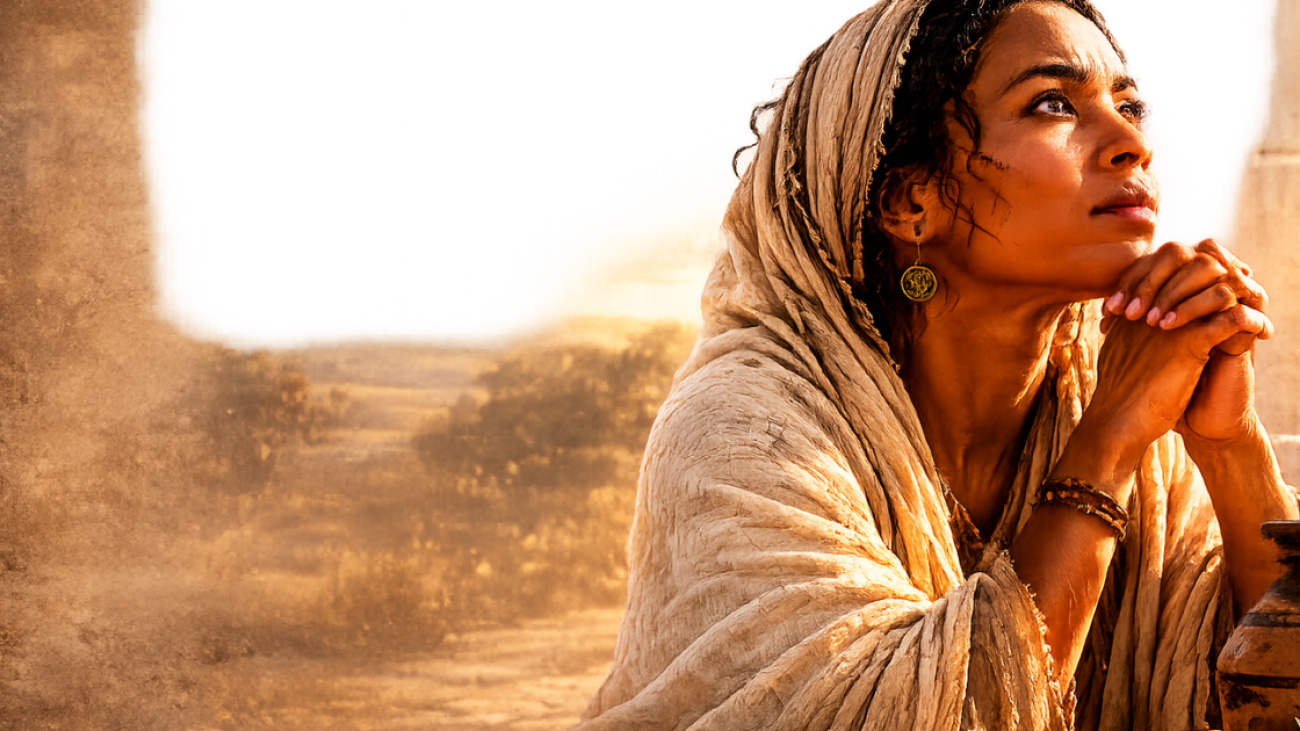
praying for husband

Why Your Faith for a Husband Has Felt Borrowed for Years

The Secondhand Faith Diagnosis Nobody in Your Church Will Give You, and the 6-Week Course That Changes It Before NOW

You are a Christian woman. You love God. And your faith for a husband has started to feel like it belongs to someone else.

Not the faith itself, you still believe. But the source of it. The prayers your mother has been praying since you were a teenager. The prophetic word you have been replaying for so long the recording is wearing thin. The declaration framework you repeat because you do not know what else to do with the longing.

None of it feels like yours anymore. Borrowed. Hollow at the root.

“When faith for a husband feels borrowed, the problem is not the quality of your believing. The problem is whose believing it has been.”

The Diagnosis: Secondhand Faith for Marriage

There is a name for this. Secondhand faith. Faith drawn from someone else’s encounter with God rather than your own. Your mother’s prayers. The prophetic word. The testimony of the woman who waited and met her husband at a prayer breakfast. The declarations taught to you by someone whose framework you borrowed.

All of it sincere. None of it originally yours. And it was designed to be a bridge, not a foundation. When the bridge becomes the permanent home, when the prophetic word has thinned, when the testimony no longer sparks, when the declarations feel empty, it gives way. Not because you failed. Because borrowed belief was never designed to go all the way.

THE DIAGNOSIS: Secondhand faith for marriage is borrowed belief that has reached its design limit. The solution is not to repeat the declarations more consistently. It is to receive your own Ruth 1.

Ruth Had No Secondhand Faith. And She Got Boaz.

Ruth is a Moabite widow. No family prayers covering her for a husband. No prophetic word. No testimony from a woman in her community. She has none of the secondhand sources most Christian women lean on.

And she makes this declaration: your God will be my God.

Not from a prophetic map. Not from someone else’s framework. From her own conviction. Her own observation of the God of Israel. Her own decision to align herself with His covenant before she had any evidence of where that decision would lead.

“Where you go I will go, and where you lodge I will lodge. Your people shall be my people, and your God my God.” — Ruth 1:16

That is firsthand faith. Her own. Unmediated. And she got Boaz. Not because she was the most spiritually polished. Because she had her own faith. And her own faith made room for everything that followed.

“Ruth did not wait for Boaz to confirm her faith. She made a declaration from her own conviction, before any confirmation arrived.”

The Names the Church Has Given You for Waiting Too Long

Leftover. Overlooked. Too much. Forgotten by God. These names are real. They arrived in real moments of real pain. But they are Sarai names. Not the name He has been calling you.

Isaiah 54:5 says your Maker is your husband. Present tense. Not will be. Is. You are already in covenant. Already covered. Already beloved by the One who created the institution of marriage. The identity is established before the marriage confirms it.

ISAIAH 54:5 — YOUR PRESENT IDENTITY: Your Maker is your husband. Not will be when the right man arrives. Is. You are already beloved. Already in covenant. The marriage is not the beginning of your beloved identity. It is the confirmation.

What The Sarah Shift: Marriage Edition Does

The Sarah Shift: Marriage Edition is six weeks on the Ruth 1 → 2-3 → 4 framework. From the diagnosis of secondhand faith through to your own Ruth 1 identity declaration and Ruth 2-3 personal encounter — before Boaz arrives.

Week 1The Diagnosis — secondhand faith for marriage named
Week 2You Are Already Beloved — Isaiah 54:5 and identity before any man confirms it
Week 3Going to the Field — four practical positioning practices from Ruth 2
Week 4When He Notices — receiving and anchoring your encounter
Week 5The Threshing Floor — Hannah’s honesty and covenant trust
Week 6Already in Your Miracle — the new measuring stick

Your Ruth 4 Is Coming. But Your Ruth 1 Is Available Right Now.

Ruth 4 only happened because Ruth had a Ruth 1. Your own declaration. Your own firsthand faith. Your own encounter with God’s character from your own conviction. The Sarah Shift: Marriage Edition is how you make that happen. Enrolment closes SOON.

2

The Real Reason Your Prayers for a Baby Have Stopped Feeling Real

And the Genesis 18 Encounter That Changes Everything Enrolment Closes SOON

There is a moment in the infertility waiting season that almost nobody talks about. The moment when the prayers stop feeling real.

Not the moment you stop believing. Not the dramatic faith crisis. Something quieter. The moment when you kneel down to pray and the words that come out sound exactly right but feel like they are going nowhere. Like the echo that used to come back has gone quiet.

And because you are the kind of woman who does not give up, you kept going. You kept saying the words. You kept attending the prayer meetings. You kept holding the prophetic word and telling yourself it was still valid.

But inside the words, where the faith used to live, hollow.

“When prayers stop feeling real, it is almost never a sign that God has stopped listening. It is almost always a sign that the faith behind the prayers has run out of its original source.”

Why Prayers Go Hollow: The Root Nobody Names

The faith behind your prayers has a source. For most Christian women in a prolonged infertility waiting season, that source is not their own direct encounter with God. It is other people’s encounters, borrowed, stacked, and re-borrowed every time the supply runs low.

The prophetic word from the conference. Your mother’s decades of intercession. The testimony of the woman who trusted God and conceived. The declarations your pastor led that you wrote down and have been repeating. These are your real sources. And they are all secondhand.

Secondhand faith is not bad faith. In the early seasons of a waiting journey, it does its job. But it was never designed to carry you indefinitely. When the prophetic word has expired in your heart, when the testimony no longer sparks what it used to, when your mother’s prayers feel like they belong to someone else’s story, the prayers go hollow. Not because God has gone. Because the foundation the prayers were standing on was never yours to begin with.

THE ROOT DIAGNOSIS: Hollow prayers are almost always a symptom of secondhand faith reaching its design limit. The solution is not to pray harder. The solution is to find your own Genesis 18, a direct, personal, firsthand encounter with God’s voice for your specific situation.

Genesis 18: The Moment Sarah’s Prayers Became Her Own

Sarah had been carrying faith for a child for over twenty years. Not her own faith, Abraham’s, filtered through to her. God had spoken to Abraham. God had made covenant with Abraham. And Sarah had believed it through the lens of her husband’s encounters.

Until Genesis 18. Three visitors came. The conversation happened outside. Sarah was inside. Close enough to the tent door that when the word was spoken, ‘Sarah your wife shall have a son’ — she heard it. For the first time. Directly. Personally.

“By faith Sarah herself received power to conceive, even when she was past the age, since she considered him faithful who had promised.” — Hebrews 11:11

The word ‘herself.’ Not Abraham’s faith. Her own. Because for the first time in her story, she had her own encounter. And her own encounter produced her own faith. And her own faith is what Hebrews calls the reason Isaac came.

Your prayers went hollow because they were running on someone else’s encounter. The Genesis 18 moment is when they stop being hollow, not because you tried harder, but because you got close enough to hear for yourself.

“The prayers go hollow when running on someone else’s encounter. They come alive again when you have your own.”

What Getting Close to the Tent Door Looks Like

Sarah did not force her way in. She was just close enough. Proximity over performance, that principle is one of the most freeing things I can offer a woman whose prayer life has gone quiet.

Honest Prayer

Stop performing for God and start talking to Him honestly. The real version. Sarah’s prayer was not polished, it was a laugh. And God heard it. He did not turn away. Honest prayer is often the doorway to encounter.

Slow Scripture

Come to scripture with a question: God, what do You want to say to me specifically today? Read until something stops you. The word that reaches you personally is the beginning of your Genesis 18.

Daily Stillness

Ten minutes. No devices. No noise. Simply: I am here. I am listening. The still small voice does not compete with noise. Create the quiet where it can reach you.

The Faithful Record

Write down everything. Every impression. Every scripture that felt addressed. Every moment of unexpected peace. The written record is your evidence that He speaks and that you are close enough to hear.

What The Sarah Shift Does for the Woman Whose Prayers Have Gone Hollow

The Sarah Shift is a six-week course built on this framework. Not more declarations. Not more encouragement. The structural shift from secondhand faith to firsthand, the journey from empty prayers to a Genesis 18 encounter.

Week 1The Diagnosis — naming secondhand faith and releasing the shame
Week 2You Are Already Sarah — Genesis 17 and the identity declared before she heard a word
Week 3Getting Close to the Tent Door — four practical positioning practices
Week 4When You Hear — five anchoring practices for receiving your encounter
Week 5The Laugh That Believed — Hebrews 11:11 and permission to stop performing
Week 6Already in Your Miracle — the new measuring stick

This Is Not the End of Your Faith. It Is the Beginning of Your Firsthand One.

Hollow prayers are not the diagnosis of a woman who has lost her faith. They are the signal that borrowed faith has run to the end of what it was designed to do. And that end is not a cliff. It is a doorway.

On the other side is Genesis 18. Your own encounter. Your own direct hearing. Enrolment closes SOON

feature image

Sarah Waited 20 Years and Still Had a Genesis 18 Moment Before Isaac Arrived

Here Is Why That Changes Everything You Thought You Knew About Your Miracle (And What to Do Before December 2026

Most people preach Genesis 21. The birth of Isaac. The miracle confirmed. The twenty-year wait finally over.

And Genesis 21 deserves to be preached. But it is the last chapter of a story that was already fully underway. If you have been measuring your miracle only by Genesis 21, you have been watching the wrong chapters.

I want to show you Chapters 17 and 18. The chapters most teachers skip. The chapters that contain the real miracle — the miracle that happened inside Sarah before Isaac was even conceived.

“Isaac was not the beginning of Sarah’s miracle. He was the confirmation of two internal miracles that had already happened inside her.”

Genesis 17: The Identity Miracle Nobody Talks About

In Genesis 17, God changes Sarah’s name from Sarai to Sarah. She is not in the room. She does not know this is happening. Sarai — my princess, possessive, limited — becomes Sarah. Princess of nations. Her destiny declared. Her identity established before she hears a single personal word from God.

She woke up that morning as Sarai. She went to sleep still calling herself Sarai. And God had already renamed her. Already declared her destiny. This is the first internal miracle. Not the baby. The identity.

THE GENESIS 17 PRINCIPLE: God declares your identity before you hear a word. The names the waiting season has given you — barren, forgotten, not enough — are Sarai names. He has been calling you Sarah the whole time.

Genesis 18: The Encounter Miracle

Genesis 18 is when Sarah hears for herself. Three visitors. Abraham outside. Sarah inside. Close enough to the door that the word reaches her. ‘About this time next year, Sarah your wife shall have a son.’ She laughed. She denied the laugh. God named her response and kept the covenant.

“By faith Sarah herself received power to conceive, even when she was past the age, since she considered him faithful who had promised.” — Hebrews 11:11

Hebrews 11 calls that faith. Laugh-accompanied, uncertainty-flavoured, honest-to-the-point-of-denial faith. Because the faith was finally hers. Her own encounter. Her own believing. And the second internal miracle was complete.

“The laugh does not disqualify the faith. It just shows what faith looks like in a real human being who has been waiting for twenty years.”

The New Measuring Stick: Are You Watching the Right Chapters?

What chapters are you watching to measure where you are in your miracle? If you are watching for Genesis 21 only, every month without it is another month of not yet. But what if you measured by Chapters 17 and 18?

Have you had your Genesis 17? Has your identity begun to shift, even quietly? Have you sensed God calling you something other than what the waiting season named you?

Have you had your Genesis 18? A scripture that felt personally addressed? A moment when something reached you differently? A quiet knowing that felt like more than your own hoping?

If yes to either of those — even a fragile, laugh-accompanied yes — you are already inside your miracle. Not waiting for it to begin. Already in it. Isaac is the confirmation of what is already true on the inside.

THE NEW QUESTION: Not: has Isaac arrived? But: have the internal miracles happened? If yes — even the beginning of yes — you are already in your miracle.

The Sarah Shift: The Complete Genesis 17 → 18 → 21 Framework

The Sarah Shift is six weeks built on this complete framework. Both internal miracles. The identity shift and the personal encounter. The new measuring stick built in from Week 1.

Week 1 The Diagnosis — naming secondhand faith and releasing the shame
Week 2 You Are Already Sarah — Genesis 17 and the identity declared before she heard a word
Week 3 Getting Close to the Tent Door — four practical positioning practices
Week 4 When You Hear — five anchoring practices for receiving your encounter
Week 5 The Laugh That Believed — Hebrews 11:11 and permission to stop performing
Week 6 Already in Your Miracle — the new measuring stick

She Laughed. She Denied the Laugh. And Hebrews 11 Still Called It Faith.

Whatever your faith looks like today, however hollow, however borrowed, however laugh-accompanied, it is not disqualified. The tent door encounter is available. The identity declaration has already been spoken. Enrolment closes THIS WEEK.